
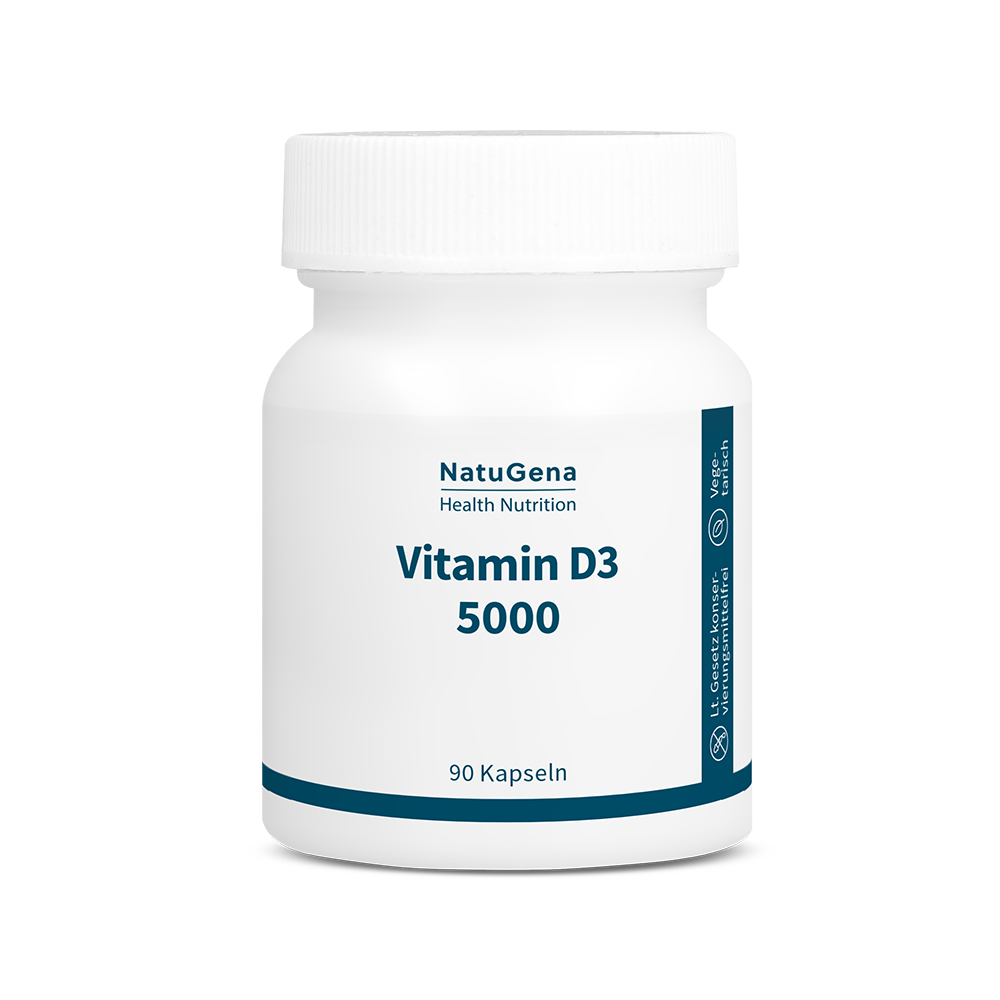
Vitamin D3 5000
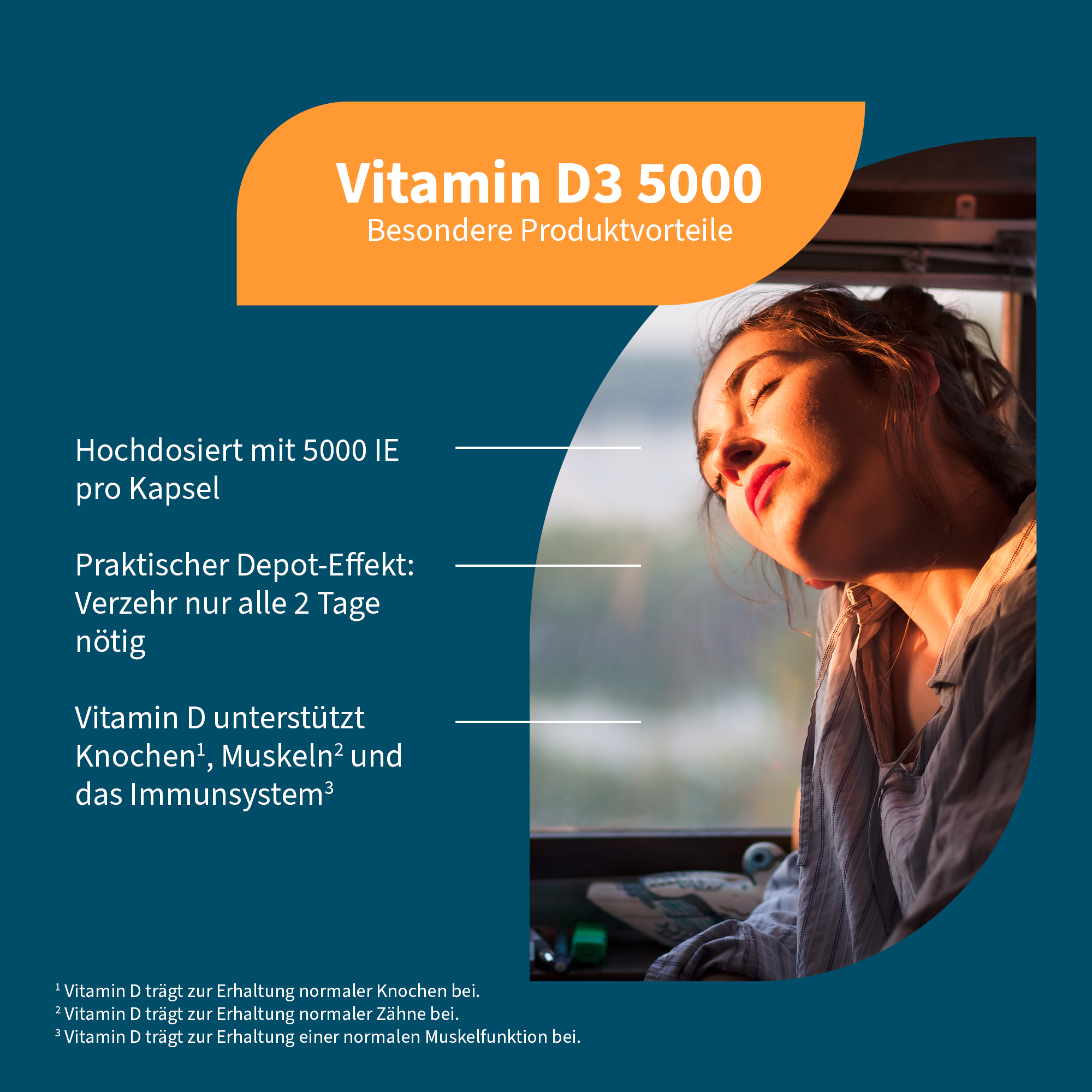
5000 IE pro Kapsel
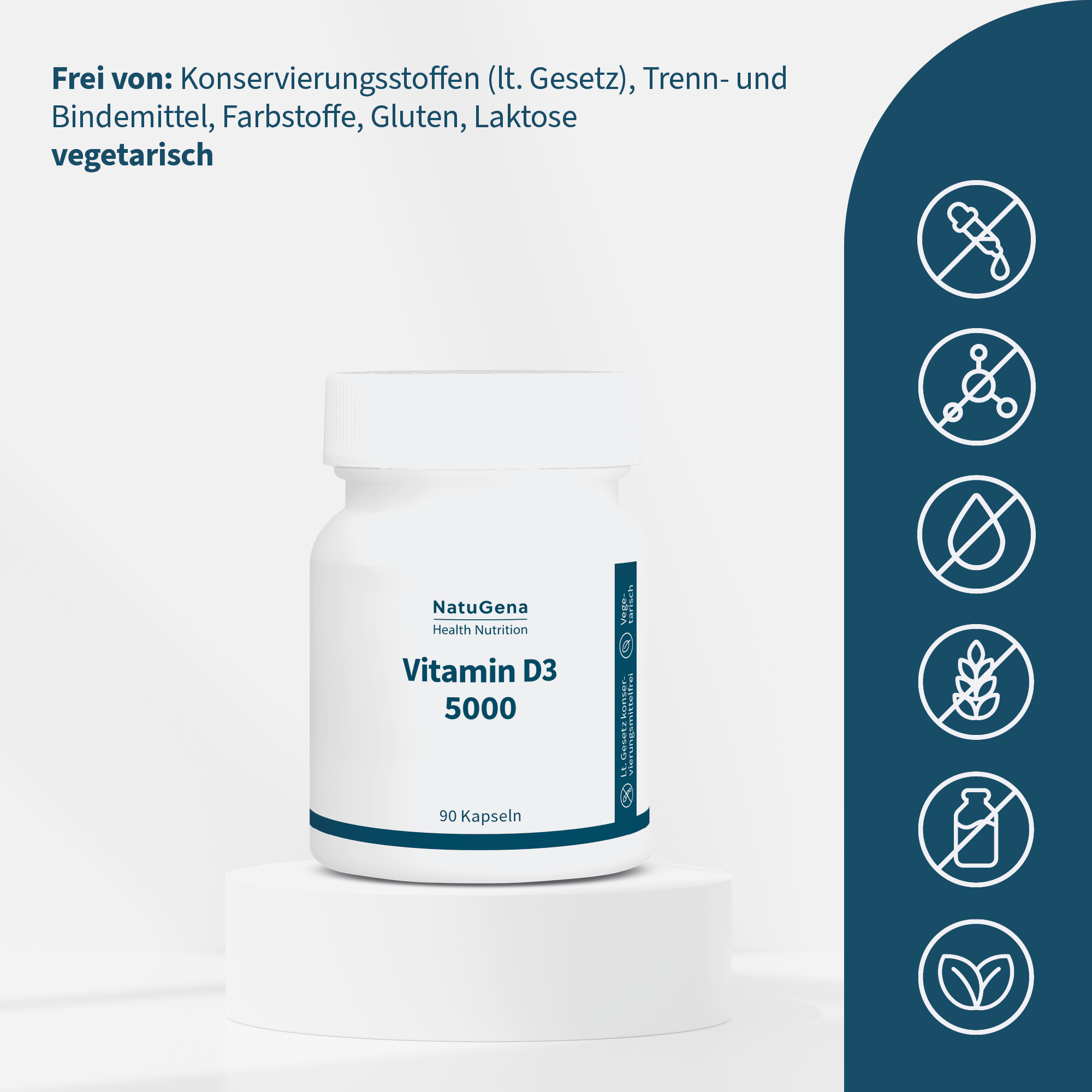
- Free of dyes
- Gluten-free
- Preservative-free as required by law
- Lactose-free
- Free of anti-caking and binding agents
| Price Tiers |
| from 1 Pieces | 13,95 € |
| from 3 Pieces | 12,95 € |
| from 5 Pieces | 11,95 € |
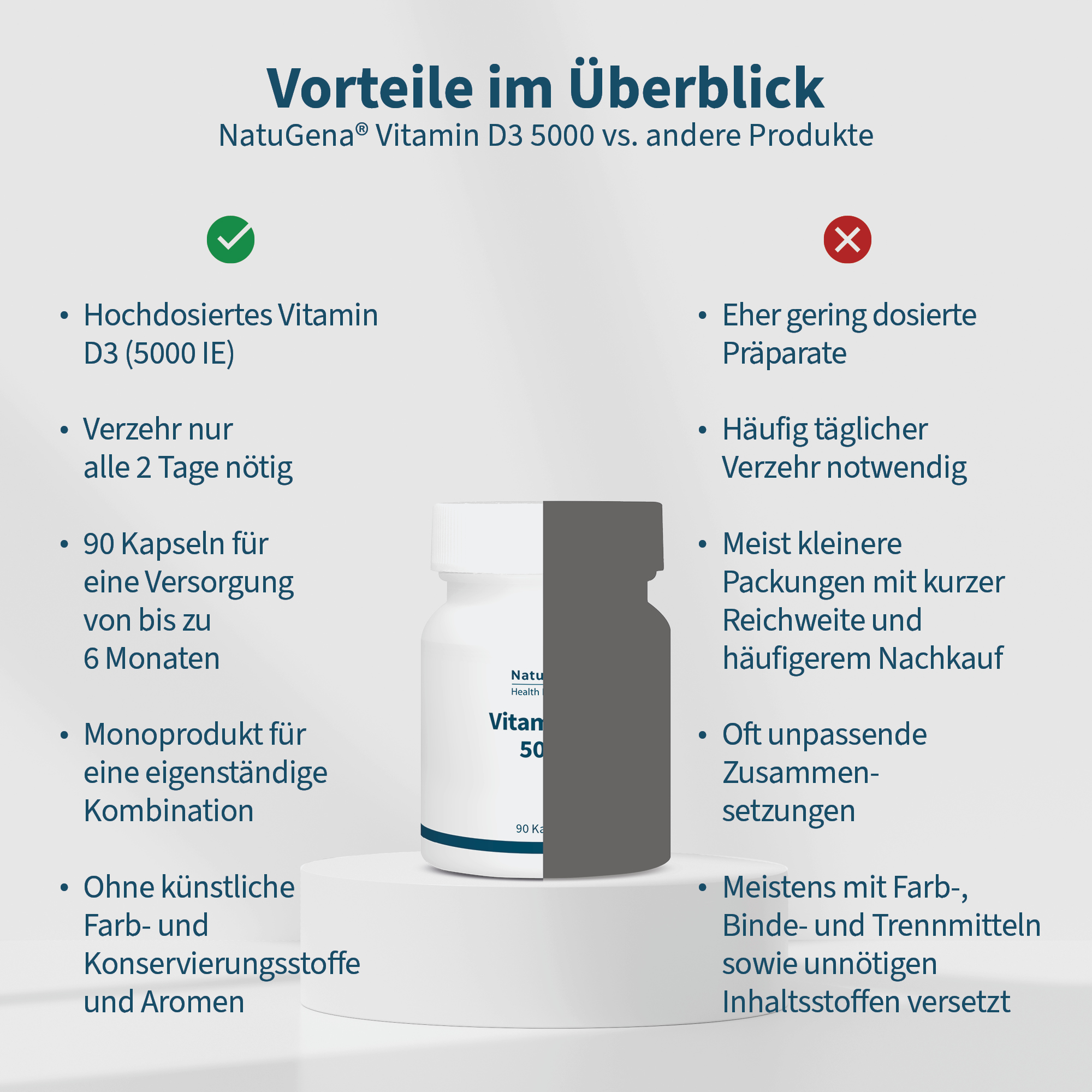
Vitamin D3 5000 Capsules – High-dose vitamin D3 with 125 µg per capsule. 90 vegetarian capsules for a supply of up to 180 days when taking one capsule every two days.
- Vitamin D3 (cholecalciferol): Fat-soluble vitamin in high-dose form
- Long-term concept: One capsule every two days for consistent supply
- Produced in Germany: Exceptional purity and bioavailability for optimal nutrient absorption
Sunlight, outdoor activity and time spent in fresh air are part of a natural lifestyle. However, especially in our latitudes, year-round vitamin D supply is not always guaranteed. Vitamin D is formed in the skin under the influence of UVB radiation. Factors such as season, time spent outdoors or individual lifestyle habits may influence this endogenous production.
NatuGena Vitamin D3 5000 was developed for individuals who value a clear, high-dose and at the same time uncomplicated application. Only one capsule every two days is sufficient to enable long-term supplementation.
Why is vitamin D important for the body?
Vitamin D is involved in numerous physiological processes. It contributes to the maintenance of normal bones, teeth and muscle function. At the same time, it contributes to normal absorption and utilisation of calcium and phosphorus and helps maintain normal blood calcium levels. It also contributes to the normal function of the immune system. In addition, vitamin D has a function in the process of cell division.
Why 5000 IU in one capsule?
With 125 µg per capsule, this version provides a high-dose single supply. The flexible intake every two days allows practical integration into daily life.
Quality
- No separating agents, binding agents or colourants
- Free from genetic engineering, nanoparticles and animal testing
- Hypoallergenic and sensitive formulations (e.g. free from lactose, soya and gluten where possible)
- Ultra-pure, plant-based coating agents (HPMC) and food-safe, light-protected containers
- Free from unwanted additives such as PEG, silicon dioxide, magnesium stearate & titanium dioxide
- Premium raw materials from pure substances
- Regular, independent testing for harmful substances
- Production in accordance with German quality standards (GMP, HACCP, ISO 9001)
Recommended Consumption
Consumption recommendation
1 capsule every 2 days. It is best taken with a meal containing fat.
Notes
Food supplements should not be used as a substitute for a balanced and varied diet and a healthy lifestyle. Keep out of reach of small children. Store closed, in a cool, dry place away from light. Do not exceed the recommended daily intake stated.
Content
|
Ingredients per
|
Capsule | NRVĹ | IEIJ |
|---|---|---|---|
| Vitamin D3 | 125 µg | 2500 | 5000 |
1 Reference amounts for the average adult according to Regulation (EU) No 1169/2011 (in %).
2 International units
Composition
Acacia fibre, coating agent: hydroxypropyl methylcellulose (HPMC); cholecalciferol.
Blog Articles

Vitamin C – The Classic Choice for Our Immune System and Its Forms of Administration
It’s hard to imagine daily life without vitamin C, and it’s often the first thing people mention when it comes to supporting the immune system. But there’s much more to this well-known nutrient than just a supplement for the cold season. From its historical beginnings on the high seas to cutting-edge technological developments, our understanding of its absorption and effects has steadily deepened. A look at its history and the various modern forms available reveals just how versatile this vitamin truly is.
Read more
Immunoglobulins – A Fascinating and Essential Part of Our Body
The term "immunoglobulins" might sound a bit complex, but don’t worry: it represents a fascinating and vital part of our body that protects us daily. This article explains what immunoglobulins are, why they are important, and what to consider if levels are too low.
Read moreFAQ
The German Nutrition Society (DGE) has specified an estimated value of 20 µg of vitamin D per day as an adequate intake for children one year of age and older and for adults. This corresponds to 800 International Units (IU).
According to the DGE, dietary intake from typical foods is not sufficient to meet this recommended intake. The shortfall must be made up through the body’s own synthesis or by taking a vitamin D supplement.
Certain groups are particularly at risk for vitamin D deficiency. If you spend little time outdoors, are immobile, work night shifts, wear heavy sun protection in the summer (sunscreen, long clothing), or are otherwise unable to synthesize vitamin D naturally, year-round vitamin D supplementation is recommended.
The body’s own synthesis of vitamin D decreases by up to 50% with age. For this reason, it is particularly important for people aged 65 and older to maintain stable vitamin D levels.
To ensure an adequate supply of vitamin D, it is recommended to have your individual blood levels measured. You can do this through your primary care physician or, for example, with the preventis test. The required daily supplementation may be higher for some individuals than what is generally recommended by the DGE.
Opinions differ on this point. We’re happy to share that the body can produce up to 15,000–20,000 IU of vitamin D on its own during a 10–15-minute sunbathing session without UV protection.
The German Nutrition Society (DGE) has specified an estimated adequate intake of 20 µg of vitamin D per day for children one year and older and for adults. This corresponds to 800 International Units (IU).
You can safely determine your individual daily dose by having your blood vitamin D level measured and using a vitamin D calculator to calculate the dose. It is recommended to have the level rechecked after a few months to see if the desired result has been achieved.
You can have the test performed by your doctor or therapist, or use a self-test kit, such as “preventis Vitamin D” from our product range.
In Germany and the EU, for legal reasons, manufacturers and consultants are permitted to publicly recommend a maximum daily intake of 1,000 IU of vitamin D. This does not mean that higher doses are not possible or advisable—particularly in cases of a confirmed deficiency or therapeutic need, a doctor or therapist may prescribe higher doses on a case-by-case basis.
In Germany and the EU, manufacturers and consultants are legally restricted to publicly recommending a maximum daily intake of 1,000 IU of vitamin D.
This does not mean that higher doses are not possible or advisable—especially in cases of a confirmed deficiency or therapeutic need, a doctor or therapist may prescribe higher doses on an individual basis. Our recommended daily intake is based on legal requirements and is not a substitute for an individual medical recommendation. If your doctor or therapist has recommended a higher dosage due to a confirmed vitamin D deficiency or your individual situation, you may follow that recommendation.
Vitamin D3 cannot be derived from plants. In our vegan products, it therefore comes from the fungal component of lichens. In our vegetarian products, it comes from lanolin, the natural wax found in sheep’s wool.
Adequate and stable vitamin D levels have a major impact on human well-being and a healthy immune system.
Your doctor can provide you with a guideline for healthy vitamin D levels.
Tip: With Preventis, you can take a vitamin D self-test right from home!
| Product | Particularly suitable for |
|---|---|
| Vitamin D3 2,000, 5,000, or 10,000 | People who want to supplement specifically with vitamin D3 only |
| Liposomal Vitamin D3 1,000 Vegan | Moderate daily vitamin D3 supplementation and vegans |
| LipoVitamine 1,000 | Daily basic intake of vitamin D3, vitamin A, K2, and other fat-soluble vitamins |
| LipoVitamine 1,000 Vegan | Vegans; liposomal formulation without vitamin E |
| LipoVitamine Beta 1,000 or 2,500 | Vegan diets, the Swiss product line, and those who prefer beta-carotene over preformed vitamin A; also included in the MamaBox value sets for pregnancy and breastfeeding |
| LipoVitamine 5,000 | When a higher intake of vitamin D3 is the priority and additional fat-soluble vitamins are needed as a supplement |
| LipoVitamine 10,000 | Situations with specific needs and a high-dose combination; preferably after consulting a healthcare professional |
| Vitamin D3 + K2 1,000 or 5,000 | People who specifically want to combine vitamin D3 with vitamin K2 |
| Vitamin Complex 1,000 or 5,000 | A combination of fat-soluble and water-soluble vitamins |
| Vitamin/Mineral Complex 1,000 or 5,000 | Especially suitable for: A more comprehensive combination of fat-soluble vitamins, water-soluble vitamins, and minerals |
Our product range includes both vitamin D3 single-nutrient supplements and combination products with additional fat-soluble vitamins.
Vitamin D3 Single-Nutrient Supplements
The single-nutrient supplements specifically contain vitamin D3 and are available in different dosages and dosage forms:
- Vitamin D3 2,000 IU
- Vitamin D3 5,000 IU
- Vitamin D3 10,000 IU
- Liposomal Vitamin D3 1,000 IU (vegan)
They are suitable for people who wish to supplement vitamin D3 specifically and without additional vitamins. The appropriate dosage should be based on individual requirements and, where applicable, on vitamin D status determined by a physician.
Combination Products
The combination products include the various LipoVitamine products as well as supplements containing vitamin D3 and vitamin K2.
LipoVitamine 5,000
LipoVitamine 5,000 was formulated with a clear focus on vitamin D3, for example to specifically support vitamin D intake. The additional fat-soluble vitamins K2, A and E are included in comparatively lower amounts and complement the formulation.
LipoVitamine 1,000
In LipoVitamine 1,000, vitamins A and K2 are present in higher amounts in relation to the vitamin D3 content. The product is therefore suitable not only for supporting the maintenance of normal vitamin D levels, but also offers additional nutritional benefits:
- Vitamin A contributes to the maintenance of normal vision, normal skin and normal mucous membranes.
- Vitamin K contributes to the maintenance of normal bones and normal blood clotting.
- Vitamin D contributes, among other things, to the maintenance of normal bones and teeth and normal muscle function.
LipoVitamine 1,000 Vegan
LipoVitamine 1,000 Vegan is the vegan version of the formulation and also contains vitamin D3 in combination with other fat-soluble vitamins. Unlike the classic version, the product does not contain vitamin E. The vegan formulation is liposomal and therefore has a milky appearance.
LipoVitamine Beta
LipoVitamine Beta combines vitamin D3 with beta-carotene as a plant-based precursor of vitamin A. The product is available in two dosages:
- LipoVitamine Beta with 1,000 IU vitamin D3
- LipoVitamine Beta with 2,500 IU vitamin D3
LipoVitamine 10,000
In terms of dosage, LipoVitamine 10,000 corresponds to ten times the amount contained in LipoVitamine 1,000. The product is formulated as a capsule and therefore provides a correspondingly higher-dose supplementation of the included fat-soluble vitamins A, K2 and E.
Vitamin D3 and K2
The combination of vitamin D3 and vitamin K2 is available in two dosages:
- Vitamin D3 + K2 with 1,000 IU vitamin D3 (drops)
- Vitamin D3 + K2 with 5,000 IU vitamin D3 (capsules)
Value Sets
LipoVitamine 1,000 and LipoVitamine 5,000 are also included in various value sets:
- Vitamin Complex 1,000 and 5,000 = combination of LipoVitamine and HydroVitamine.
- Vitamin/Mineral Complex 1,000 and 5,000 = combination of LipoVitamine, HydroVitamine and OrgaMin.
This allows fat-soluble and water-soluble vitamins as well as selected minerals to be combined according to individual requirements.
Here you can find a clear overview and explanation of the different products: Vitamin D3 Drops
| Product | Vitamins | Vegetarian* | Vegan* | Liposomal** | Drops | Capsules | |||
|---|---|---|---|---|---|---|---|---|---|
| D3 | K2 | A | E | ||||||
| Blends | |||||||||
| LipoVitamine® 1000 | yes | yes | yes | yes | yes | — | — | yes | — |
| LipoVitamine® 1000 Vegan | yes | yes | yes | — | yes | yes | yes | yes | — |
| LipoVitamine® 5000 (A) | yes | yes | yes | yes | yes | — | — | yes | — |
| LipoVitamine® 10,000 | yes | yes | yes | yes | yes | — | — | — | yes |
| Vitamin D3 & K2 | yes | yes | — | — | yes | — | — | yes | — |
| Single-Nutrient Supplements | |||||||||
| Liposomal Vitamin D3 1000 Vegan | yes | — | — | — | yes | yes | yes | yes | — |
| Vitamin D 2000 | yes | — | — | — | yes | — | — | yes | — |
| Vitamin D 5000 | yes | — | — | — | yes | — | — | yes | — |
| Vitamin D 10,000 | yes | — | — | — | yes | — | — | yes | — |
| Vitamin D 20,000 | yes | — | — | — | yes | — | — | yes | — |
| Vitamin A | — | — | yes | — | yes | yes | — | yes | — |
| Vitamin K2 | — | yes | — | — | yes | yes | — | yes | — |
* Vegetarian, as the vitamin D is derived from lanolin, the wool fat of sheep. Vegan vitamin D is derived from lichen.
** The liposomal formulation can be taken independently of meals, which is a major advantage.
Here we offer various concentrations of vitamin D per drop. Our LipoVitamine 5000 product, for example, contains 5,000 IU of vitamin D3 per drop!
The liposomal vitamin D products are also vegan:
- LipoVitamine 1000 Vegan (with D3, K2 & A)
- Liposomal Vitamin D3 1000 Vegan
The advantage of the liposomal formulation over MCT oil is improved absorption thanks to the finely dispersed droplets, which can be absorbed directly through the oral mucosa. This allows for flexible intake regardless of mealtimes and is therefore also suitable whilst fasting.
Our tried-and-tested vitamin D products containing MCT oil are:
- LipoVitamins (1000, 5000 & 10,000) with D3, K2, A and E
- LipoVitamins Beta 1000 & 2500 with D3, K2, beta-carotene and E
- Vitamin D3 & K2 drops and, as capsules, Vitamin D3+K2 5,000
- Vitamin D 2,000
- Vitamin D 5,000 and, as capsules, Vitamin D3 5,000 capsules
Products containing MCT oil can be optimally combined with omega-3 oil or with a high-fat meal.
Vitamin D is a fat-soluble vitamin. It is best absorbed when taken with fat. NatuGena’s liquid vitamin D products are formulated in a high-fat solution. MCT oil is used as the carrier oil, which is regarded as being of very high quality.
In our new liposomal formulation, the vitamin D dissolved in MCT oil is contained in an oil-in-water emulsion. The finely dispersed, nanometre-sized droplets are very easily absorbed through the oral mucosa.
The food can be warm, but not hot, as vitamin D is only moderately heat-stable. Fat, as a carrier, is very helpful for absorption. The included carrier, MCT oil, already makes a small contribution to good absorption. To further optimise absorption, take the drops with a high-fat meal, e.g. in the vegetable oil of a salad dressing, on buttered bread, with nuts, or with our omega-3 oil.
Tip: Combine omega-3 oil with vitamin D3! Mix the omega-3 directly with the vitamin drops in the bottle.
Yes, magnesium and vitamin A can be combined well with vitamin D.
According to Mr Uwe Gröber’s patient guide on vitamin D, magnesium influences the absorption of vitamin D and vice versa. Take a look at our magnesium products here.
Vitamin A is already included in our LipoVitamine products. We also stock it as a single-ingredient supplement.
The ideal storage conditions for our vitamin D drops are in a cool, dark place (maximum room temperature 17–20 °C or in the fridge).
Once opened, we recommend storing the product in the fridge (5–7 °C) and closing the lid promptly after use to minimise the influx of oxygen. The product has a shelf life of 2 years from the date of manufacture (best before). Please ensure hygienic dispensing. We recommend dispensing the drops from a distance of 10–15 cm to avoid contamination.
If you regularly take omega-3 oil supplements, you can also mix the vitamin D oil directly with them. Simply add the appropriate number of vitamin D drops to the omega-3 bottle, depending on the planned duration of use.
The vitamin D capsule products can be stored in a cool, dark place (at a maximum room temperature of 17–20 °C or tightly sealed in the fridge).
No, vitamin D3 and vitamin K2 do not necessarily have to be taken together or at the same time. Both vitamins fulfil distinct functions: vitamin D contributes to the normal absorption and utilisation of calcium, as well as to the maintenance of normal bones. Vitamin K also contributes to the maintenance of normal bones and to normal blood clotting. As both are fat-soluble, it is recommended that they be taken with a meal containing some fat.
Yes, vitamin D3 can generally be taken without additional vitamin K2. Vitamin K2 is not required for either the absorption or the activation of vitamin D3. Whether a combination or single-ingredient supplement is more suitable depends on individual needs, diet and any medication being taken.
A combination supplement may be useful if both vitamins are to be specifically supplemented. Vitamin D and vitamin K each contribute to the maintenance of normal bones and thus complement one another in calcium and bone metabolism. However, this does not justify a general recommendation to take vitamin K2 whenever vitamin D is taken. In cases of high-dose vitamin D3, osteoporosis or existing medical conditions, intake should be discussed with a healthcare professional.
Important note: Anyone taking vitamin K antagonists such as phenprocoumon or warfarin should only use vitamin K-containing dietary supplements after consulting their doctor.
Anyone taking vitamin K antagonists such as Marcumar® – which contains the active ingredient phenprocoumon – or warfarin should only take vitamin K2 supplements after consulting their doctor. Vitamin K can affect the anticoagulant effect of these medicines. If taken, this should therefore be done under regular monitoring of the INR or Quick value, where appropriate.
With other anticoagulant medicines, the interaction is not necessarily the same; nevertheless, as a precaution, the intake of vitamin K2 should be discussed with your doctor.
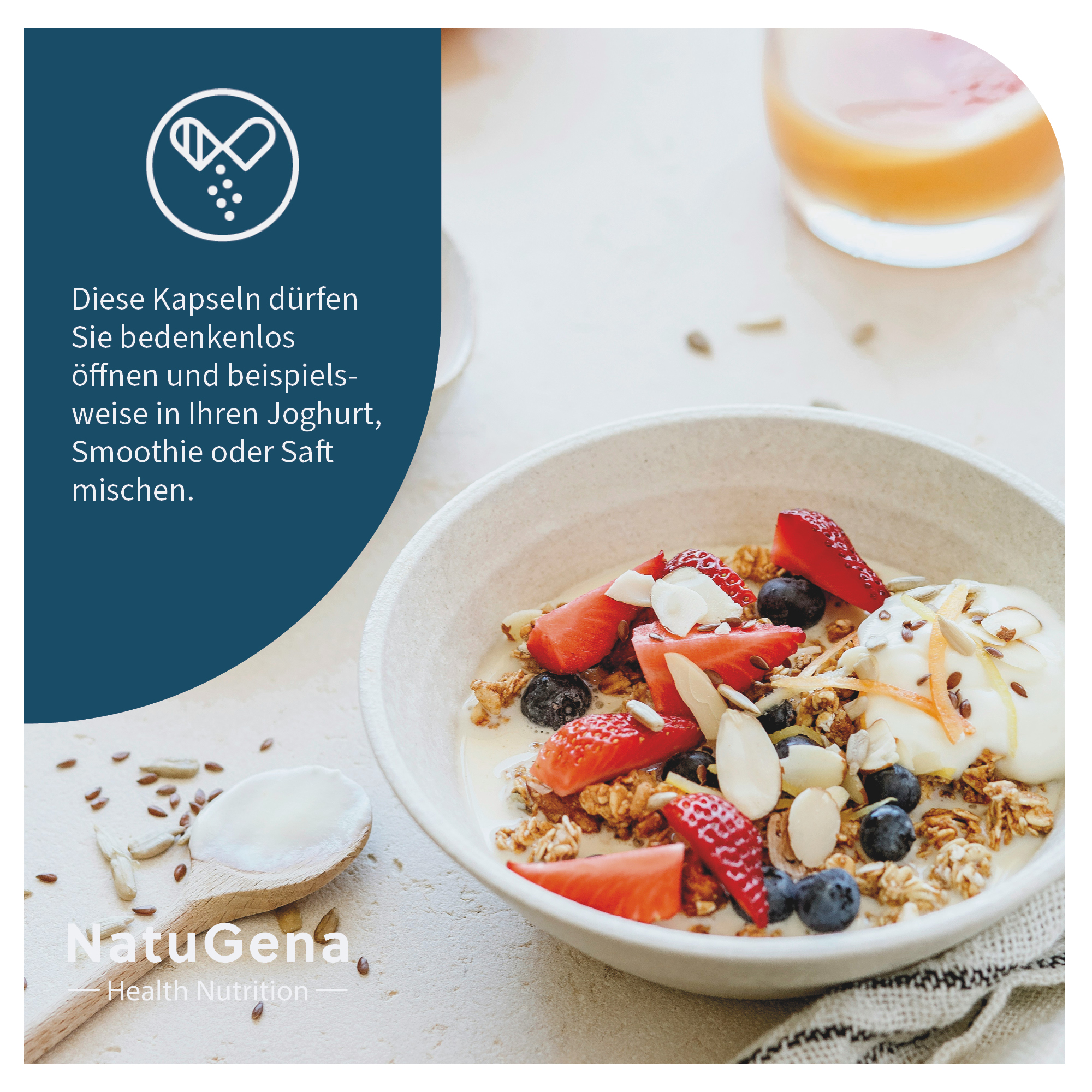
Most of our capsules can be opened without any concerns. The contents can be stirred into yogurt, plant-based yogurt, applesauce, smoothies, or juice, for example.
One of the reasons we encapsulate the ingredients is to keep their sometimes intense natural taste and smell as neutral as possible. When opened, the taste and smell may therefore be more noticeable.
Did you know? Our capsules can be easily opened by gently twisting them.
Please do not open: enteric-coated capsules
For certain bacterial and enzyme products, we use enteric-coated capsules. These should not be opened, as doing so may alter the intended release profile.
These include, for example:
- Bacterial preparations, such as HistaBakt, MakroAktiv, and BactoGena 21+2
- Enzyme products, such as N-Zymarase® Intest and N-Zymarase® Inflam. Exception: N-Zymarase Komplex contains betaine HCl, which is intended to take effect in the stomach; therefore, it does not have an enteric-coated capsule shell and can be opened
- Soft capsules with liquid contents, such as omega-3 capsules, are also not intended to be opened. In this case, you can switch to the liquid oil instead.
If you have any questions, please contact our advisory team at info@natugena.de.
From the very beginning, NatuGena has used exceptionally pure, plant-based HPMC capsules in the majority of its products. HPMC stands for hydroxypropyl methylcellulose and is made from plant-based cellulose.
Unlike many HPMC capsules commonly available on the market, the coating agents we use contain no carrageenan or PEG. Although they are more expensive, they meet our high standards for a carefully selected and transparent product composition.
Our plant-based HPMC capsules are:
- 100% plant-based cellulose (HPMC)
- Carrageenan-free
- PEG-free
- Gelatin-free
- GMO-free
- Free of allergens and irritants
What types of capsule shells are used in omega-3 products?
Special softgels are required for liquid oils. Our classic omega-3 capsules therefore contain a coating made from gelatin and glycerin and are not vegan.
In our vegan omega-3 capsules made from algae oil, the coating consists of glycerin and modified cornstarch and contains no gelatin. This makes these capsules suitable for a vegan diet.
The exact composition of each coating agent is clearly listed in the ingredients list.
It All Comes Down to the Composition
Conventional capsule shells may contain technical additives—such as anti-caking agents, release agents, or binders—due to the manufacturing process. These components aren’t always immediately apparent, as certain processing aids aren’t required to be listed in the ingredients list.
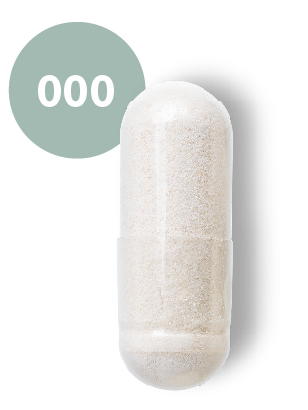
Most of the NatuGena capsule products are size 00 (8,2 × 23,3 mm) to 0 (7,3 × 21,2 mm). Information on the capsule sizes of individual products can be found on the relevant product page or by contacting info@natugena.de
 |
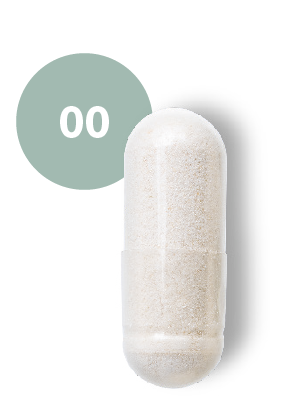 |
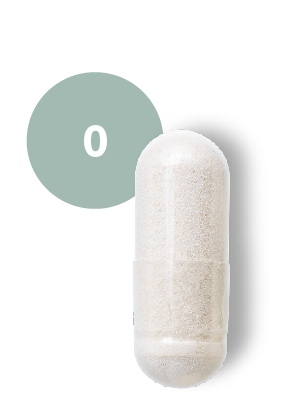 |
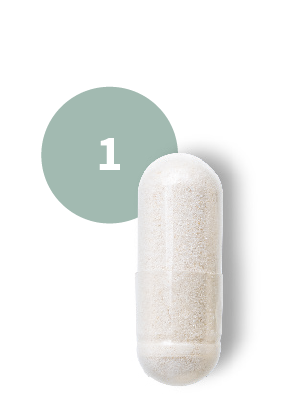 |
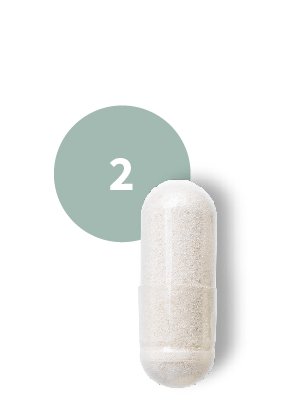 |
 |
|---|---|---|---|---|---|
| 9,5 × 26,1 mm | 8,2 × 23,3 mm | 7,3 × 21,2 mm | 6,6 × 19,0 mm | 6,1 × 17,3 mm | 5,6 × 15,4 mm |
| z. B. Lysin & Vitamin C, Monacolin K 3 |
z. B. Magnesia 7+1, MitochondrienAktivator 44+14, HeparAktiv |
z. B. ZellEnergie, MultiVegan, Astaxanthin |
z. B. HistaBakt, Bor, Bioaktiver B-Komplex |
not in use | z. B. Kupfer, LipoVitamine 10 000, Mangan-Komplex |
We work with the independent laboratory AgroLab, which we commission to perform microbiological and heavy metal tests.
In our microbiological testing, we measure the aerobic mesophilic plate count (total plate count), as well as the levels of Escherichia coli (E. coli), yeasts, Salmonella, molds, and staphylococci.
For heavy metals, we test for arsenic, lead, cadmium, and mercury in accordance with the limit values specified in Regulation (EU) 2023/915.
The optimal duration of use depends on the specific nutrient, your initial situation, diet, and individual requirements.
There is therefore no one-size-fits-all recommendation for how long a product should be taken. For products intended to support nutrient intake over a longer period, use over several weeks to months may be appropriate. In many cases, a period of around three months may be suitable before nutrient status and further requirements are reassessed.
In the case of diagnosed deficiencies, medical conditions, or the use of medication, the use of supplements should be individually discussed with a doctor or qualified healthcare professional.
The optimal time to take a supplement depends on the specific nutrient, individual tolerance, and the composition of the product. However, some ingredients can be particularly well suited to certain times of day or meals.
In the morning
Stimulating ingredients are often preferably taken in the morning or during the first half of the day. These include, for example:
- Coenzyme Q10
- Green tea extract
- Certain B vitamins
Especially for sensitive individuals, it may be advisable to avoid taking stimulating ingredients immediately before bedtime.
Throughout the day
For some nutrients, it may be beneficial to divide the daily amount into several doses.
Water-soluble vitamins such as B vitamins and vitamin C can be taken throughout the day.
Magnesium can also be divided into several doses rather than taking the entire daily amount at once. This may improve tolerance, particularly with higher amounts.
In the evening
Depending on the type of magnesium compound, taking it in the evening may be beneficial. Magnesium glycinate, for example, is often preferably taken in the evening.
In general, however, the best time to take a product also depends on when it is individually best tolerated and can be reliably incorporated into your daily routine.
With a meal
Some nutrients benefit from being taken together with a meal.
Fat-soluble vitamins A, D, E, and K can be taken together and ideally with a meal containing some fat.
Omega-3 fatty acids should also be taken regularly with a meal. Omega-3 oils can be combined well with fat-soluble vitamins.
Many plant-based ingredients can also be taken as part of a meal or together with omega-3 products. However, the optimal timing depends on the specific plant compound and product formulation.
Zinc can cause nausea or stomach discomfort on an empty stomach in some people. If you have a sensitive stomach, it is therefore advisable to take zinc with a meal.
Between meals
Iron is often taken separately from meals, as various foods and beverages can affect its absorption. It is particularly advisable to leave a gap between iron and:
- Coffee and tea
- Caffeinated beverages
- Milk and dairy products
- Calcium- or mineral-rich supplements
However, if you have a sensitive stomach, iron can also be taken with a meal. In this case, individual tolerance is more important than a theoretically optimal intake situation.
Enzyme supplements vary depending on their intended use: digestive enzymes are generally taken with meals. Products that are specifically intended to be taken between meals may, for example, be taken around 30 minutes before a meal. The product's specific recommended intake should always be followed.
Around exercise
Proteins and amino acids can be taken both before and after training.
If you exercise on an empty stomach, taking them around 30 minutes before training may be beneficial. If you have already eaten a protein-rich meal, you can also plan your protein intake for after training.
In general, ensuring sufficient protein intake throughout the entire day is more important than adhering to a narrow time window around your workout.
Responsible person for the EU
The economic operator based in the EU responsible for this product:
NatuGena GmbH, Münchener Str. 149, 85051 Ingolstadt, Germany,
+49 841 90 255 000, info@natugena.de, https://www.natugena.de