
19.08.2026 Verena Christina Ewert, M.Sc., Ernährungs- und Mikronährstoffberaterin
Understanding Leaky Gut: Symptoms, Akkermansia, and Nutrition for the Gut Barrier
Bloating, changes in bowel movements, food intolerances, or persistent fatigue are often associated with so-called leaky gut. This can quickly create the impression that the intestinal wall is damaged and simply needs to be “sealed” again with the right products.
However, it is not quite that simple.
The intestinal barrier is not a rigid wall, but a living interface made up of the mucus layer, intestinal cells, immune structures, and microorganisms. One particularly interesting inhabitant of this interface is the bacterium Akkermansia muciniphila. It lives in close proximity to the intestinal mucosa and is therefore being studied increasingly in connection with the intestinal barrier.
But what does leaky gut actually mean? Which symptoms can be associated with it? How meaningful is an Akkermansia value—and which dietary factors are important for the intestinal environment?
What Is Leaky Gut—and What Does a Permeable Intestine Mean?
“Leaky gut” means a “permeable intestine.” In research, this is referred to as increased intestinal permeability. It can occur in connection with certain diseases. However, so-called leaky gut syndrome is not a uniformly defined medical diagnosis.
The intestinal surface has to be permeable so that water and nutrients can be absorbed. At the same time, the intestinal barrier regulates which substances are allowed to pass through. It therefore functions more like border control than a closed wall.
How Is the Intestinal Barrier Structured? Why It Is Not a Rigid Wall
The intestinal barrier consists of several layers:
- the mucus layer,
- the cells of the intestinal epithelium,
- the connections between intestinal cells,
- components of the immune system,
- the gut microbiome.
The cell connections, also known as tight junctions, are continuously regulated. The mucus layer limits direct contact between intestinal contents and intestinal cells while also serving as a habitat for certain microorganisms.
What matters, therefore, is not a completely “sealed” intestinal barrier, but one that is selectively and controlledly permeable.
Which Symptoms Are Associated With Leaky Gut?
Commonly mentioned symptoms include bloating, abdominal pressure, changes in bowel movements, diarrhea or constipation, food intolerances, fatigue, and a general feeling of being unwell.
However, these symptoms are nonspecific and can have many different causes. Individual laboratory values such as zonulin or abnormal bacterial levels also do not allow a clear diagnosis on their own.
The overall picture is what matters, including symptoms, medical history, diet, medication use, and further examinations. Severe or persistent symptoms, blood in the stool, unexplained weight loss, fever, recurrent vomiting, or symptoms occurring at night should be evaluated by a physician.
Akkermansia muciniphila: A Specialist of the Mucus Layer
Akkermansia muciniphila prefers to live close to the intestinal mucosa and utilizes components of so-called mucins. “Mucin” refers to mucins, while “phila” roughly means “loving.”
Mucins are protein-sugar compounds and essential components of the mucus layer. Their breakdown produces metabolic products such as acetate and propionate, some of which can be further utilized by other gut bacteria.
Akkermansia is therefore not an isolated player, but part of a complex microbial network.
Low Akkermansia—Does That Already Mean Leaky Gut?
A single Akkermansia value does not provide a reliable indication of how stable the intestinal barrier is.
The bacterium prefers to live close to the mucus layer and may therefore not be fully detected in a stool sample. The analytical method, sample collection, diet, medications, or infections can also influence the result.
A low value therefore does not prove leaky gut—and a high value does not automatically mean that the intestinal barrier is especially stable. What matters is the interaction between the microbiome, mucus layer, diet, and microbial metabolic activity.
Akkermansia and Diet: What Influences the Intestinal Environment?
Akkermansia is not a typical fiber-degrading bacterium. Its direct food source consists primarily of components of the mucin layer. Nevertheless, diet influences the overall environment in which Akkermansia and other gut bacteria live.
Particularly relevant are:
- different sources of dietary fiber,
- a diverse selection of plant-based foods,
- adequate protein intake,
- an appropriate supply of micronutrients.
What matters is not a single “Akkermansia superfood,” but the long-term dietary pattern.
Dietary Fiber and Short-Chain Fatty Acids: Fuel for the Gut Ecosystem
Certain types of dietary fiber reach the large intestine undigested or partially digested, where they can be fermented by gut bacteria. This process produces substances including acetate, propionate, and butyrate.
Butyrate serves as an important energy source for the cells of the colonic mucosa. Even though Akkermansia does not use dietary fiber in the same way as classic fiber-degrading bacteria, fiber is important for the gut ecosystem as a whole.
Which Micronutrients Are Important for Normal Mucous Membranes?
Vitamin A and vitamin B2 contribute to the maintenance of normal mucous membranes. Vitamin A also supports the normal function of the immune system. Vitamin B2 additionally contributes to normal energy metabolism and to the protection of cells from oxidative stress.
Zinc contributes to the normal function of the immune system and to the protection of cells from oxidative stress. Zinc also plays a role in cell division.
Food sources include:
- Vitamin A or carotenoids: egg yolk, carrots, pumpkin, and green leafy vegetables
- Vitamin B2: dairy products, eggs, whole grains, and nuts
- Zinc: meat, cheese, legumes, nuts, and whole grains
Combined nutrition concepts also often include L-glutamine and plant-based ingredients such as aloe vera. L-glutamine occurs naturally in the body and in protein-rich foods. Aloe vera gel is traditionally used in various preparations and is often combined with fiber, amino acids, or micronutrients.
Supporting the Intestinal Environment: First Steps in Everyday Life
The intestinal environment is not shaped by a single measure, but by habits that can be maintained over the long term.
A practical way to get started:
- Observe diet and symptoms: Which meals are well tolerated, and when do symptoms occur?
- Gradually increase plant diversity: Combine vegetables, legumes, whole grains, fruit, nuts, seeds, herbs, and spices in a varied way.
- Increase dietary fiber slowly: Introduce new sources one at a time and give the digestive system time to adapt.
- Drink enough fluids: Swelling fibers in particular require sufficient fluid intake.
- Limit free sugars: Consume soft drinks, sweets, and highly sweetened foods only occasionally. However, a completely sugar-free diet is generally not necessary.
- Plan for movement and recovery: Regular physical activity, sufficient sleep, and deliberate recovery periods create supportive conditions.
- Make changes one at a time: Bacterial cultures, fiber products, micronutrients, and plant-based ingredients can complement a balanced diet. However, introducing several new products at once makes it more difficult to assess individual tolerance.
Bacterial cultures, fiber products, micronutrients, and plant-based ingredients can complement a balanced diet. In people with sensitive digestion, the goal is not the highest possible fiber intake, but a gradual increase that is individually well tolerated. In the case of acute intestinal diseases, known narrowing of the digestive tract, or pronounced symptoms, dietary changes should be supervised by a qualified professional.
Conclusion: Start With One Step
Leaky gut cannot be clearly identified either on the basis of nonspecific symptoms or a single bacterial value. In the case of persistent symptoms, professional medical assessment should therefore come first.
For everyday life, however, not everything has to be changed at once. A good starting point is to consciously observe your diet for a few days and then add one well-tolerated source of fiber or one additional plant-based food. Only once that change is working well should the next step follow.
Vitamin A and vitamin B2 contribute to the maintenance of normal mucous membranes. Selected bacterial cultures, fiber products, and micronutrients can be useful additions to a balanced diet. If you have questions, consult your healthcare practitioner.
What matters is not perfection, but a tolerable routine that can be maintained over the long term.
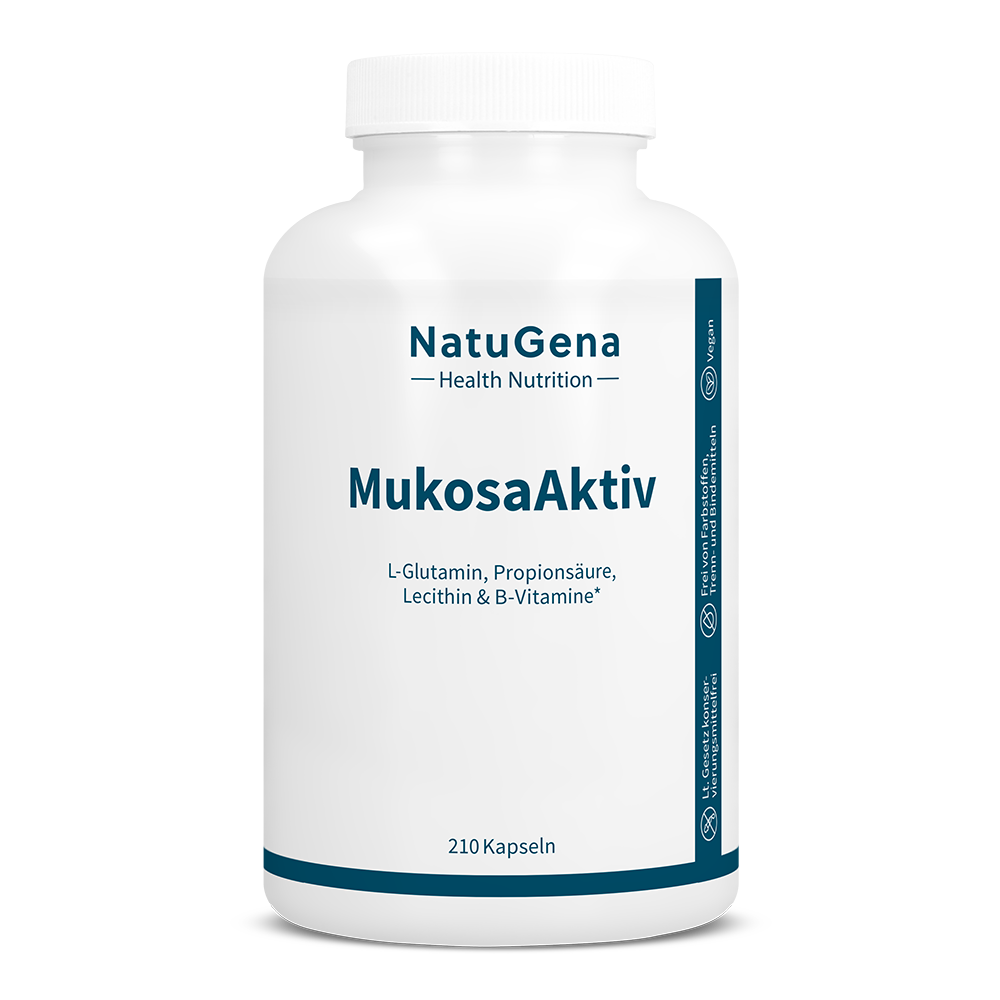
MukosaActive
L-glutamine, propionic acid, extracts of chamomile and frankincense, lecithin
Combines L-glutamine, L-alanyl-L-glutamine, propionic acid, selected plant extracts, and vitamins such as vitamin A, vitamin B3, and biotin to support the maintenance of normal skin and mucous membranes.


49,95 €
Other Articles

22.10.2026 Redaktion
Blue Light and Sleep: How Our Daily Habits Disrupt the Sleep-Wake Cycle
Using smartphones, working on computers, and streaming TV series – especially right before bedtime – can interfere with the function of our pineal gland. Among other things, this small gland regulates the release of the hormone melatonin, which is normally produced in greater amounts as darkness falls in the evening.
Read more
16.10.2026 Redaktion
Daylight Saving Time and Sleep Problems: Why Does Your Internal Clock Resist the Time Change?
The alarm goes off, but your head feels heavy. Although the clocks are turned back by one hour in autumn, seemingly allowing more time for rest, your usual routine can be thrown off balance. Many people struggle to fall asleep in the evening or wake up feeling exhausted.
Read more
12.10.2026 Redaktion
Omega-3 for Children: What Parents Should Keep in Mind in Everyday Family Life
Many parents are familiar with situations like these: Their child seems restless, has difficulty concentrating, or quickly feels overwhelmed. Homework takes forever, attention constantly shifts, and at the same time, the child finds it difficult to relax.
Read more