
18.05.2026 Verena Christina Ewert, M.Sc., Ernährungs- und Mikronährstoffberaterin
Cycle-Based Training: Which Sports Are Best for Each Phase of the Cycle
Why Women Shouldn’t Work Out the Same Way Every Day — and How Exercise, Nutrition, and Hormones Interact
The music at the gym is loud, the weights are clanging, and the room is buzzing with energy. Next to you, someone is pushing through their next rep. You’re really ready to give it your all today.
You step up to the barbell, lower into a squat — and suddenly you feel dizzy. Your circulation slows down, your legs feel heavy. Yet your workout last week went off without a hitch. Then it hits you: your period has started.
Many women are familiar with situations like this. Some days, working out feels powerful and easy; on others, even a moderate workout is surprisingly exhausting. This is often dismissed as a lack of motivation or just a bad day.
But in reality, there’s often something else entirely behind it: the menstrual cycle.
More and more studies show that exercise can be experienced differently throughout the cycle. Those who understand their bodies and adopt cycle-oriented training can better support their performance, recovery, and well-being. Nevertheless, persistent myths surrounding exercise and periods persist.
Time to take a closer look.
Exercise and the Menstrual Cycle: What Science Tells Us
The female menstrual cycle consists of several phases and is primarily regulated by estrogen and progesterone. Among other things, these hormones influence:
- Energy levels and endurance
- Muscle growth and recovery
- Metabolism and fluid balance
- Mood and stress resilience
A major review in sports medicine (McNulty et al., 2020) shows that performance can fluctuate throughout the cycle; strength, perceived endurance, and motivation, in particular, are hormone-dependent.
This does not mean that women are less capable, but rather that cycle-oriented training is often more effective than rigid training plans.
Cycle-Based Training: Which Phase Is Best for Which Sport?
The menstrual cycle consists of several phases that differ hormonally. These changes can influence energy levels, resilience, and recovery. Cycle-based training takes these differences into account and adapts intensity and training methods to the respective phase of the cycle. Some phases are better suited for intense workouts, while others are better for moderate training or active recovery.
1. Exercise During Your Period: What Types of Activity Are Beneficial Now
During menstruation, both estrogen and progesterone levels are relatively low.
The body is at the beginning of a new cycle. Some women feel tired during this phase, experience lower abdominal cramps, or have lower energy levels.
Others, however, report a sense of relief because the hormonal tension of the second half of the cycle subsides.
Some women feel tired or have lower abdominal cramps during this phase, while others report a sense of relief because the hormonal tension of the second half of the cycle subsides.
Exercise can definitely be helpful during this phase. Studies show that light physical activity can improve blood circulation and reduce menstrual cramps—likely due to improved blood flow and the release of endorphins. Moderate exercise can also positively influence overall well-being.
Suitable activities may include:
- Yoga
- Mobility training
- Walking
- Light cycling
- Light strength training
It is important to listen to your body and adjust the intensity of your workout accordingly. On some days, exercise can be beneficial; on others, more rest is advisable—both are perfectly acceptable.
2. Follicular Phase (After Your Period): The Best Time for Intense Training
The so-called follicular phase begins after your period. During this time, estrogen levels rise slowly. Many women report increased energy, better recovery, and greater motivation to train.
During this phase, many find it easier to perform more intense training sessions or introduce new training stimuli. Even more complex exercises or demanding workouts are often perceived as less taxing than in other phases of the cycle.
Now is a particularly good time for more intense training:
- Strength training
- Interval training
- New training stimuli
From a sports science perspective, it is interesting to note that estrogen can influence insulin sensitivity and muscle recovery, among other things. As a result, more intense training is often well tolerated during this phase.
3. Ovulation Phase: When Your Athletic Performance Is at Its Peak
Around the time of ovulation, many women reach their highest energy levels. Estrogen levels are high, and motivation for intense workouts often increases as well.
Some studies show that maximum strength and explosive power can be particularly well-utilized during this phase.
Cycle-oriented training means tailoring your training, recovery, and energy levels more closely to your own body. If you understand the phases of your cycle and adapt your training flexibly to it, you can train more sustainably in the long term and often with greater enjoyment. Suitable training methods during the ovulation phase:
- intense strength training
- HIIT workouts
- sprint training
- functional training
- cross-training
- high-intensity team sports
- challenging workouts with new training stimuli
A good warm-up remains important, however, as some studies suggest a slightly increased risk of ligament injuries.
4. Luteal Phase (Before Your Period): Why Exercise Might Feel Different Before Your Period
After ovulation, the so-called luteal phase begins. During this phase, the hormone progesterone dominates.
Physiologically, this phase is designed to prepare the body for a potential pregnancy. As a result, certain physical processes change: body temperature rises slightly, energy requirements may increase, and recovery may take longer. Some women also notice mood swings, changes in energy levels, or PMS symptoms during this time.
Many women feel more easily exhausted or less energetic during this phase than in the first half of the cycle. However, this does not mean that exercise must be avoided altogether. It is often advisable to adjust the intensity of your workouts slightly and focus more on moderate-intensity sessions.
Here are some examples of moderate workouts that can be beneficial:
- moderate strength training
- lower-intensity endurance training
- Pilates
- stability and core training
- mobility sessions
Recovery also plays a greater role during this phase. Getting enough sleep, taking breaks between more intense workouts, and managing stress effectively can help support the body during this phase of the cycle.
Nutrition During the Menstrual Cycle: Often Underestimated
Nutrition can have a significant impact on exercise, recovery, and overall well-being throughout the menstrual cycle. A balanced intake of nutrients supports energy metabolism, hormonal regulation, and physical resilience.
The following nutrients, among others, are particularly important:
- Iron: important during heavier menstruation, as iron can be lost through blood. An adequate supply supports oxygen transport in the body and can prevent fatigue.
- Magnesium: contributes to muscle relaxation and can be particularly helpful during the luteal phase.
- B vitamins: support the nervous system and energy metabolism.
- Vitamin D: plays a role in mood, immune function, and hormonal regulation.
- Adequate energy intake: crucial for a stable cycle and effective training adaptation.
Studies also link omega-3 fatty acids to reduced inflammation and potentially fewer menstrual symptoms. A balanced diet can therefore serve as a solid foundation for supporting training and well-being throughout the menstrual cycle.
Why cycle-based training makes sense in the long term
The female menstrual cycle is not an obstacle to athletic performance, but rather a natural rhythm that can provide valuable insights for training and recovery. Cycle-based training means tailoring your training, recovery, and energy levels more closely to your own body and consciously taking the different phases of your cycle into account.
Those who structure their training flexibly throughout the menstrual cycle can often better manage training intensity and recovery. As a result, many women report greater enjoyment of training and less pressure to perform. Cycle-oriented training therefore does not mean less ambition, but rather a more mindful and individually tailored approach to training.
Practical Tips for Everyday Life
- Track your cycle (app or calendar)
- Consciously monitor your energy levels
- Flexibly adjust your training
- Get enough sleep
- Take stress management seriously
- Don’t underestimate the importance of nutrition
Your own body always remains the most important guide—it often provides the best clues about what’s good for you right now.
Do you know a friend who always trains against her cycle instead of with it? Then send her this article — maybe it will make her next workout a little easier.
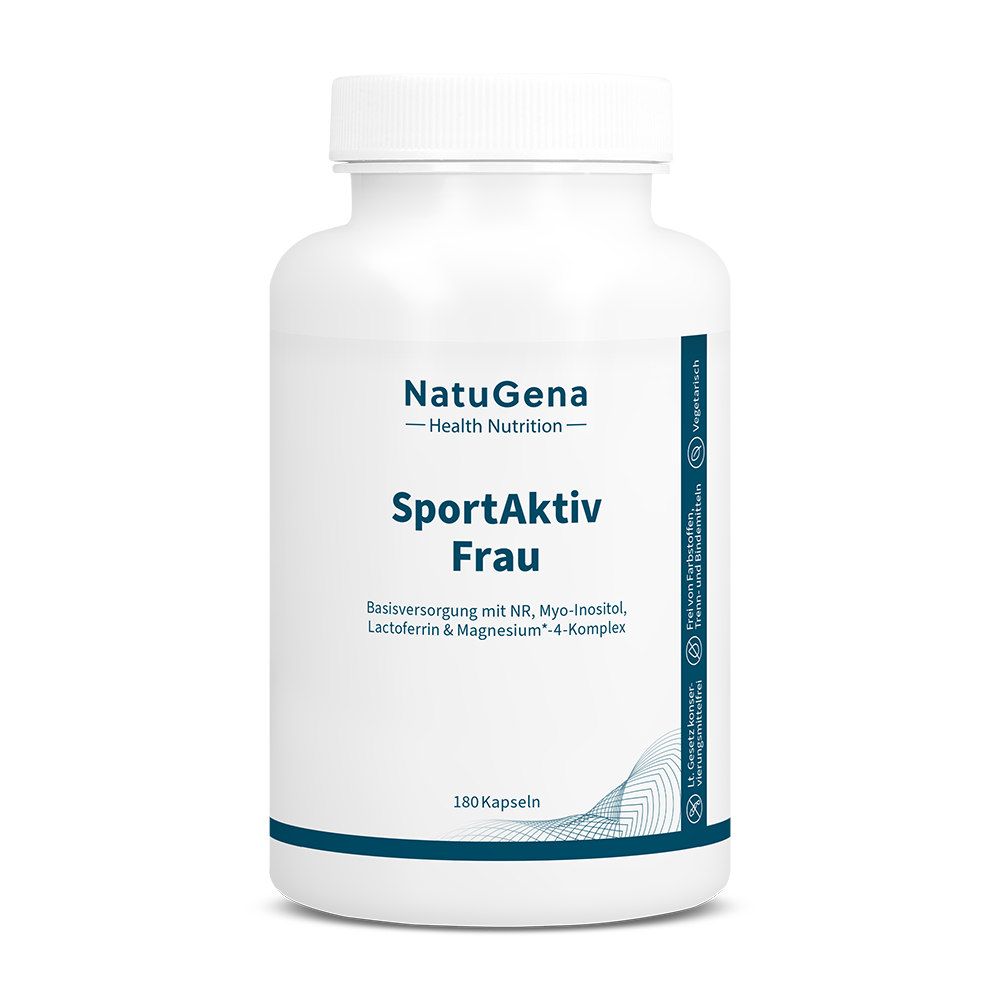
SportActive Woman
Basisversorgung mit NR, Myo-Inositol, Lactoferrin & Magnesium-4-Komplex
Selected vitamins, minerals and functional ingredients for active women


49,95 €
Other Articles

22.10.2026 Redaktion
Blue Light and Sleep: How Our Daily Habits Disrupt the Sleep-Wake Cycle
Using smartphones, working on computers, and streaming TV series – especially right before bedtime – can interfere with the function of our pineal gland. Among other things, this small gland regulates the release of the hormone melatonin, which is normally produced in greater amounts as darkness falls in the evening.
Read more
16.10.2026 Redaktion
Daylight Saving Time and Sleep Problems: Why Does Your Internal Clock Resist the Time Change?
The alarm goes off, but your head feels heavy. Although the clocks are turned back by one hour in autumn, seemingly allowing more time for rest, your usual routine can be thrown off balance. Many people struggle to fall asleep in the evening or wake up feeling exhausted.
Read more
12.10.2026 Redaktion
Omega-3 for Children: What Parents Should Keep in Mind in Everyday Family Life
Many parents are familiar with situations like these: Their child seems restless, has difficulty concentrating, or quickly feels overwhelmed. Homework takes forever, attention constantly shifts, and at the same time, the child finds it difficult to relax.
Read more