
24.11.2026 Claudia Dippel, Heilpraktikerin
Men's Health: Prostate and Bladder
Prostate Health: A Topic Worth Talking About
For both women and men, bladder leakage or a constant feeling of pressure on the bladder can be an uncomfortable subject. For men, there is often the additional issue of bothersome post-void dribbling. The cause frequently lies in the prostate: this chestnut-sized gland is located directly beneath the bladder and surrounds the urethra. In addition to producing part of the seminal fluid and converting testosterone into its active form, it plays a significant role in urinary function.
Most men rarely think about this important organ in everyday life, usually only when the first symptoms appear. Typical signs may include a frequent urge to urinate, nighttime urination, the feeling that the bladder has not emptied completely, or bothersome post-void dribbling.
Causes of Benign Prostatic Hyperplasia (Prostate Enlargement)
The causes are varied, and approximately 70% of men over the age of 70 are affected by prostate enlargement. This process develops gradually, and almost 20% of men in their 50s are already affected. Fortunately, an enlarged prostate is benign in many cases.
Nevertheless, it is advisable to have the prostate checked regularly by a urologist. A visit to the urologist not only helps clarify possible symptoms but also allows potential changes to be detected at an early stage. Regular preventive check-ups are also a good way for men to keep an eye on their health.
As men age, their hormonal balance changes as well—not as abruptly or dramatically as it does for us women, but rather gradually. Testosterone levels slowly decline, while the balance between testosterone and estrogen may shift.
Incidentally, men and women have the same steroid hormones, namely testosterone, estrogen, and progesterone, although in different proportions and physiologically healthy concentrations.
For both sexes, estrogen can also be produced in fatty tissue. Abdominal fat plays a particularly important role here, as it is not only hormonally active but can also promote inflammatory processes in the body.
When it comes to prostate health, changes in diet, physical activity, and consciously slowing down in everyday life can be supportive. A welcome side effect for most men is feeling more comfortable in their own bodies.
I have also observed in my practice and among friends that men around the age of 50 are particularly open to making changes when it comes to preventive healthcare. Especially when initial laboratory results show unfavorable values, many men become motivated and implement these changes very consistently. They pay closer attention to their diet, incorporate more exercise into their daily routines, and often significantly reduce their alcohol consumption.
Cell Renewal and Autophagy
Our bodies are constantly undergoing processes of building up and breaking down. Cells and their components are renewed, replaced, and adapted to the body's changing needs.
One important natural mechanism involved in these processes is autophagy. The term comes from Greek and literally means "self-eating." It refers to a natural cellular recycling process in which damaged or no longer needed cell components are broken down and their building blocks reused. In this way, autophagy helps maintain cellular function and the internal balance of cells.
As we age, the balance between the formation of new cells and the breakdown of existing cells may change. This can also play an important role in the prostate.
Here, cell division and therefore the formation of new cells may increase, while fewer cells are removed through the natural process of programmed cell death, known as apoptosis.
When more cells are produced than broken down, prostate tissue may gradually enlarge. This process is one of the mechanisms involved in the development of benign prostate enlargement.
Botanical Insights into Men's Health
A balanced, plant-focused diet can be an important part of a health-conscious lifestyle. Particularly in the context of men's and prostate health, certain nutrients and plant compounds with a long history of traditional use are attracting increasing scientific interest.
Spermidine
Spermidine is a polyamine found in all living cells. Current research into autophagy—the body's natural process of breaking down and recycling damaged cellular components—is particularly fascinating.
Spermidine occurs naturally in wheat germ, soybeans, legumes such as lentils and chickpeas, mushrooms such as button mushrooms and shiitake, aged cheeses such as Parmesan, whole grains, and broccoli.
Its concentration varies considerably depending on the variety and method of preparation.
Pumpkin Seeds – Small, Zinc-Rich Superfoods
Pumpkin seeds contain valuable fatty acids, phytosterols, and zinc.
We now know that zinc acts as an activator for at least 300 enzymes and that the prostate contains the highest concentration of zinc in its tissue.
Saw Palmetto (Serenoa repens)
Saw palmetto is one of the best-known plants associated with prostate health.
The ripe berries of the palm, in particular, contain valuable fatty acids, phytosterols, secondary plant compounds, polysaccharides, and essential oils.
Nettle Root (Urtica dioica)
When it comes to men's well-being, nettle root has an established place in traditional herbal medicine.
Like pumpkin seeds and saw palmetto, it contains phytosterols, fatty acids, and polysaccharides, as well as lectins, lignans, and coumarins.
My Personal Tip: Willowherb
Less well known is small-flowered willowherb, a plant with a long tradition in natural medicine.
In traditional herbal medicine, it is often prepared as a tea. Its constituents include tannins, flavonoids, phytosterols, mucilage, and vitamin C.
Herbal preparations and dietary supplements are not a substitute for medical evaluation or treatment of prostate enlargement. Their use should ideally take place under the guidance and supervision of a healthcare professional.
A Personal Thought to Close
Health and feeling comfortable in your own body are not goals you achieve once and then tick off your list.
They develop every day through many small decisions: taking a walk during your lunch break or in the evening, eating mostly freshly prepared meals, setting aside a peaceful hour in the evening, and being willing to regularly check in with yourself and notice what makes you feel good.
Preventive health check-ups are part of this, too.
I hope you approach your own path with curiosity and joy. Your body holds a great deal of wisdom. We can learn to treat it with respect and patience.
This text is not a substitute for medical advice or treatment. If symptoms persist, it is always advisable to consult a medical specialist.
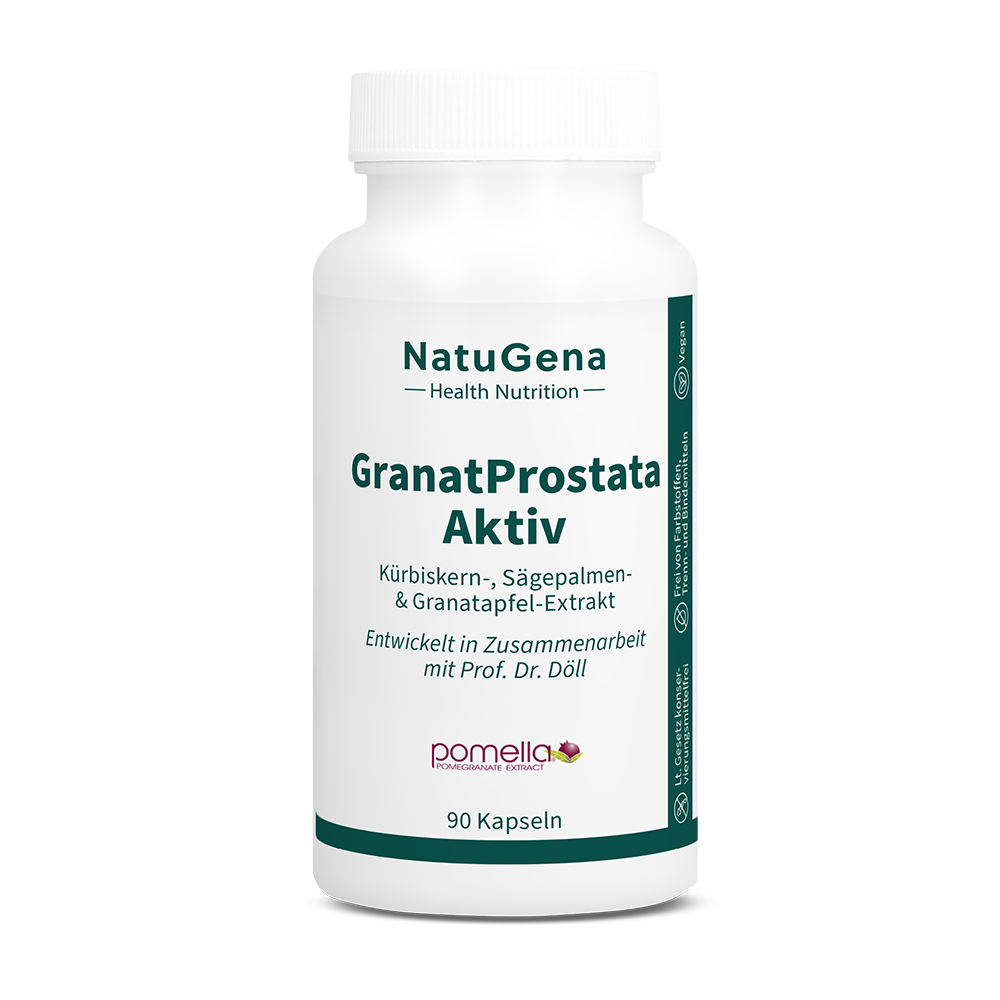
GranatProstata Active
Pumpkin Seed & Pomegranate Extract with Beta-Sitosterol & Phytosterol
With patented Pomella® whole-fruit pomegranate extract, plus vitamin B2 and zinc.


39,95 €
Other Articles
18.11.2026 Magdalena Meier, M.Sc. Biologie
Which Blood Tests Are Important? What a Complete Blood Count Reveals and What It Doesn't
Many people have regular blood tests and assume that these provide a comprehensive overview of their health. However, this is where a common misunderstanding arises. A standard complete blood count (CBC) with differential primarily examines the different types of blood cells and provides only limited information about the body's actual nutrient status or metabolic processes.
Read more
05.11.2026 Claudia Dippel, Heilpraktikerin
Water Retention and Heavy Legs in Winter
It's warm indoors, cold and wet outside, and suddenly something feels uncomfortable: Your shoes seem too tight, sock marks are clearly visible around your ankles, and your legs feel unusually heavy and swollen. Many people associate this phenomenon with the hot summer months. But water retention can also occur during the colder seasons.
Read more
09.11.2026 Hannah Sailer, Heilpraktikerin