
01.06.2026 Claudia Dippel, Heilpraktikerin
Mitochondria – much more than just your cells’ powerhouses
Mitochondria are often referred to as the “powerhouses of the cell,” but this term covers only a fraction of their actual functions. In fact, they are involved in a wide range of fundamental processes, including hormone synthesis, protection against oxidative stress, and the regulation of adaptive and stress responses.
Symptoms such as persistent fatigue, hormonal fluctuations, increased susceptibility to infections, or declining resilience can rarely be attributed to a single cause. Especially in cases of unclear or complex symptoms, it can be helpful to take a closer look at mitochondrial function. This often reveals connections that aren’t immediately obvious but allow for a deeper understanding of the biological processes in the body.
What are mitochondria?
Almost every cell in our body contains these tiny organelles. Their primary function is to produce ATP (adenosine triphosphate), the fuel for all biological processes. Without ATP, there would be no muscle movement, no heartbeat, and no clear thinking.
The number of these energy suppliers in a cell depends on the tissue’s energy requirements:
- Approx. 5,000 in heart muscle cells due to the heart’s continuous pumping action
- Approx. 2,000 in liver cells to support chemical detoxification processes
- Up to 100,000 in egg cells to supply energy for the first cell divisions after fertilization
In particularly active tissues such as the heart muscle, mitochondria can account for up to 30–40% of the total cell volume. All cells in the body have mitochondria with one exception: red blood cells. They do not have mitochondria and obtain their energy exclusively through glycolysis.
Why Mitochondria Have Their Own DNA
What sets mitochondria apart from other cellular components is their own DNA. This so-called mtDNA comprises 37 genes and is passed down exclusively through the maternal line.
The reason for this lies far back in evolutionary history. The endosymbiont theory describes an event that occurred about 1.5 to 2 billion years ago, when an early cell took in an oxygen-utilizing bacterium and failed to digest it. Instead, a symbiotic relationship developed. The bacterium provided energy through oxygen utilization, while the host cell offered protection and nutrients. This collaboration eventually gave rise to the complex cells that made multicellular organisms—and ultimately us humans—possible in the first place.
Functional Diversity of Mitochondria: Roles Beyond Energy Production
As the cell’s powerhouses, we first think of energy, but mitochondria do much more than that:
- Calcium Regulation: Mitochondria store and regulate calcium, a mineral essential for the transmission of nerve impulses and muscle contraction.
- Steroid hormone synthesis: Hormones such as cortisol, estrogen, progesterone, and testosterone are all derived from cholesterol, and mitochondria directly coordinate this synthetic pathway. Anyone discussing hormonal imbalances should therefore always keep mitochondrial function in mind.
- Cell protection and apoptosis: Mitochondria regulate programmed cell death, a biologically necessary process that prevents damaged cells from continuing to live uncontrollably.
- Heat production: A portion of the body’s heat is generated directly by activity within the mitochondria.
The citric acid cycle: the heart of energy production
The actual production of energy occurs in several steps. In the citric acid cycle—often referred to as the Krebs cycle—nutrients from carbohydrates, fats, and proteins are converted into energy-rich intermediates. These intermediates supply electrons to the respiratory chain, where ATP is ultimately produced.
For this process, the body relies on B vitamins, magnesium, and coenzyme Q10 as essential cofactors. This connection illustrates why micronutrient intake is so directly linked to an individual’s energy levels.
When the Balance Is Upset: Causes and Consequences of Mitochondrial Disorders
Mitochondria are particularly sensitive to two types of stress:
- Oxidative stress caused by free radicals
- Nitrosative stress triggered by reactive nitrogen species
If these stresses persist over a prolonged period, mitochondrial dysfunction can occur, a condition now referred to as mitochondriopathy. Energy production then no longer reaches its full potential.
Possible symptoms of impaired energy metabolism may include:
- Persistent exhaustion, even leading to fatigue
- Muscle pain and stiffness
- Concentration problems and memory difficulties
- Migraines and headaches
- Heart rhythm disturbances
- Increased susceptibility to infections
- Sleep disturbances
Even in cases of HPU, it is worth keeping an eye on the mitochondria.
Why Mitochondria Are Under Particular Strain Today
Our increasingly sensory-overloaded world brings with it an unprecedented array of stressors that challenge our mitochondria on a daily basis:
- Environmental toxins in the air, water, and food
- Additives in food and cosmetics containing problematic ingredients
- Electromagnetic radiation from cell phones, Wi-Fi, and the dense digital infrastructure
- Chronic psychological stress
- Lack of sleep and insufficient recovery time
- Lack of physical activity
Such influences increase the need for protective mechanisms and repair processes. This often results in a significantly increased need for micronutrients, which can hardly be fully met by a conventional diet alone.
The foundation for healthy mitochondrial function
Mitochondrial health starts with your daily diet. A diet based on complex carbohydrates, high-quality proteins, and healthy fats—ideally fresh and unprocessed—supports cellular processes.
Mitochondrial energy production relies on a number of cofactors:
- B vitamins: This group includes vitamins B1, B2, B3, and B5, with B3 being particularly necessary for NAD⁺ production and B2 for FADH₂.
- Magnesium: This mineral is involved in nearly all steps of ATP production within the cell.
- Coenzyme Q10: As a molecule involved in electron transport, it possesses antioxidant properties, while the body’s own production declines with age.
- Antioxidants: These include glutathione, selenium, zinc, and manganese, which protect cells from oxidative damage caused by free radicals.
- Alpha-lipoic acid: This compound exhibits both water- and fat-soluble antioxidant effects.
- Omega-3 fatty acids: These fatty acids help keep mitochondrial membranes flexible and functional.
- L-carnitine: This compound transports fatty acids into the mitochondria, thereby enabling effective fat burning.
A personalized regimen can be a useful supplement to one’s diet. Guidance from an experienced therapist can help tailor the selection and dosage to suit your individual situation.
Inspiration from Everyday Life – Mild Stress as a Training Stimulus
There is a term in biology that aptly describes this principle: hormesis. It refers to the observation that a mild stress stimulus—when properly dosed—makes cells more resilient. Aerobic exercise, for example, stimulates the formation of new mitochondria in skeletal muscle, as the body’s own protective mechanisms are actively upregulated in the process.
Additional hormesis stimuli suitable for everyday life to boost cellular metabolism:
- Cold stimuli (cold showers, contrast showers)
- Intermittent fasting
- Moderate, regular exercise
- Alternating between heat and cold (e.g., sauna)
- Breathing exercises with a slight increase in CO₂
Important to note: These stimuli only have an effect when used in moderation. The subtle difference between “challenging” and “overwhelming” is of great importance.
Chronic Stress – The Silent Enemy of Mitochondria
It is not acute stress that places the greatest strain on our mitochondria, but rather chronic stress. During periods of chronic stress, the body’s need for micronutrients increases, while its ability to absorb and utilize them decreases: a cycle that develops gradually and often goes unnoticed until it is too late.
Typical signs of chronic stress may include:
Persistent poor or shallow sleep
Inner restlessness and tension without a recognizable trigger
Ruminating thoughts that are difficult to interrupt
Lack of body awareness, numbness, or a sense of detachment from oneself
Lack of energy despite sufficient sleep
Persistent feelings of coldness, especially in the hands and feet
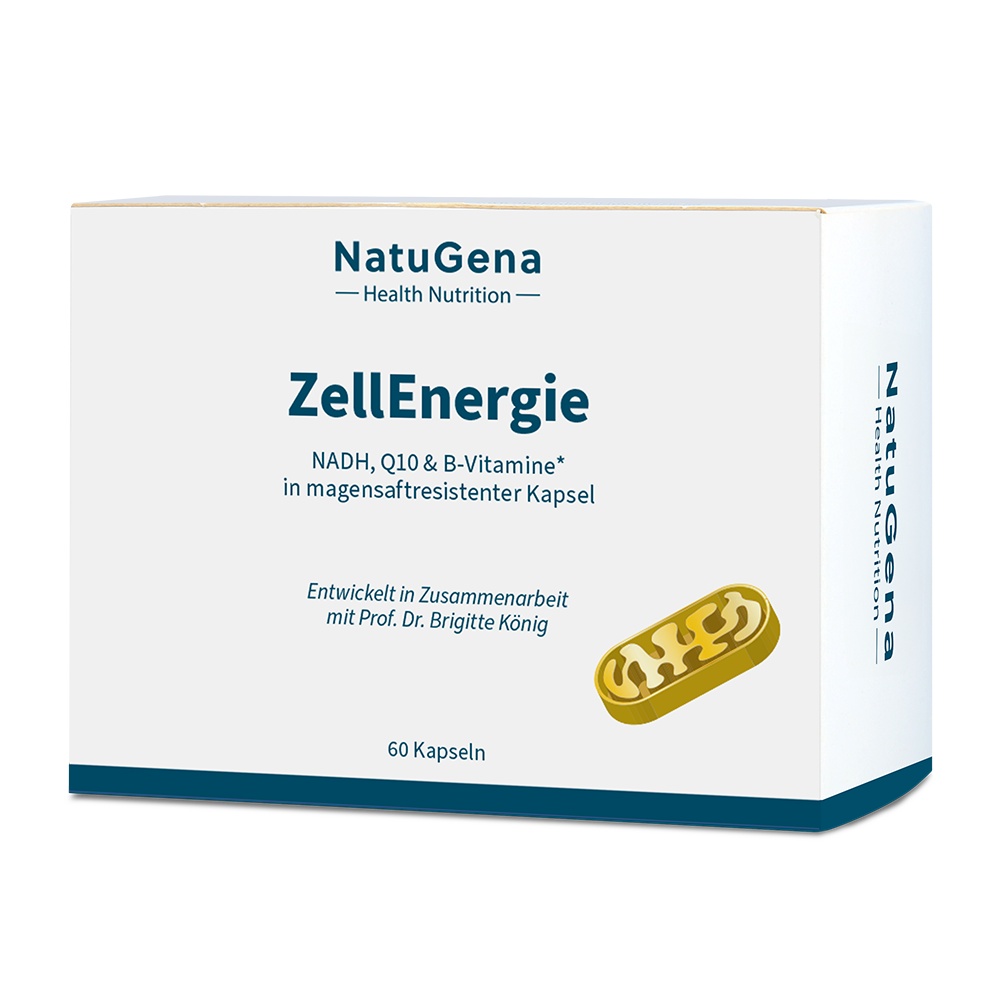
CellEnergy
10 mg NADH & 150 mg Coenzym Q10
Contains a carefully selected combination of vitamins and minerals that support the body's functions.


49,95 €
Unsere Empfehlungen


Alpha-Ketoglutarate Complex
Arginine alpha-ketoglutarate (AAKG) & calcium alpha-ketoglutarate (CaAKG)
24,95 Zum Produkt
Other Articles

22.10.2026 Redaktion
Blue Light and Sleep: How Our Daily Habits Disrupt the Sleep-Wake Cycle
Using smartphones, working on computers, and streaming TV series – especially right before bedtime – can interfere with the function of our pineal gland. Among other things, this small gland regulates the release of the hormone melatonin, which is normally produced in greater amounts as darkness falls in the evening.
Read more
16.10.2026 Redaktion
Daylight Saving Time and Sleep Problems: Why Does Your Internal Clock Resist the Time Change?
The alarm goes off, but your head feels heavy. Although the clocks are turned back by one hour in autumn, seemingly allowing more time for rest, your usual routine can be thrown off balance. Many people struggle to fall asleep in the evening or wake up feeling exhausted.
Read more
12.10.2026 Redaktion
Omega-3 for Children: What Parents Should Keep in Mind in Everyday Family Life
Many parents are familiar with situations like these: Their child seems restless, has difficulty concentrating, or quickly feels overwhelmed. Homework takes forever, attention constantly shifts, and at the same time, the child finds it difficult to relax.
Read more