
24.05.2026 Grit Leiendecker, Heilpraktikerin & Ernährungstherapeutin
Magnesium – a versatile nutrient for muscles, nerves, and energy metabolism
Magnesium is an essential mineral and plays a role in hundreds of enzymatic reactions in the body. As a so-called bulk element, we need relatively large amounts of it every day. Despite its vital importance, the recommended magnesium intake is not met by large segments of the population. Carefully selecting high-quality magnesium supplements can therefore make an important contribution to meeting this need.
Despite its central importance, the recommended magnesium intake is not met by large segments of the population. Conscious supplementation with appropriate forms of magnesium can therefore help to specifically supplement daily intake.
The Role of Magnesium in the Body – Functions in Metabolism and the Nervous System
Magnesium does not act in isolation within the body but is deeply integrated into fundamental metabolic and regulatory processes. This mineral is involved in functions that affect physical performance as well as neural processes and regenerative mechanisms. The physiological effects of magnesium are correspondingly wide-ranging.
Magnesium for Muscles & Nerves
Magnesium supports normal muscle function, as it works together with calcium to enable the contraction and relaxation of muscles. While calcium promotes muscle contraction, magnesium supports the subsequent relaxation.
The nervous system also relies on an adequate supply of magnesium. The mineral is involved in nerve impulse transmission and acts as a cofactor for numerous enzymes in neurotransmitter metabolism. As a result, magnesium influences processes such as neural signal transmission and neuromuscular control.
Magnesium for Energy & Cellular Metabolism
Magnesium plays a key role in energy metabolism: It contributes to normal energy metabolism and is necessary for the formation and activation of adenosine triphosphate (ATP), which acts as the universal energy carrier in cells.
Cells with high energy demands, including muscle, nerve, and heart muscle cells, are particularly dependent on an adequate supply of magnesium. An intake tailored to these needs thus supports energy-dependent metabolic processes at the cellular level.
Magnesium for Bones & Teeth
Magnesium contributes to the maintenance of normal bones and teeth. A significant portion of the magnesium present in the body is stored in bone tissue, where it is structurally integrated and plays a role in mineral balance.
Along with calcium and phosphorus, magnesium is thus one of the minerals that contribute to the stability of the skeletal system.
Other benefits of magnesium at a glance
- contributes to normal protein synthesis
- contributes to normal cell division
- contributes to electrolyte balance
- helps reduce tiredness and fatigue
Magnesium in the Body – Distribution, Storage, and Diagnosis
Magnesium is found primarily inside cells, and only a small amount is detectable in the blood. The total amount of magnesium in the human body is approximately 20 to 30 grams.
Distribution of magnesium in the body:
- Over 50% is stored in the bones
- Approx. 20% in the muscles
- Less than 1% in the blood
About 95% of total magnesium is found inside cells. Given this, normal serum levels cannot reliably rule out a magnesium deficiency at the cellular level. For a more nuanced assessment, the measurement of magnesium levels in whole blood is therefore frequently used.
The body strictly regulates blood magnesium levels to maintain vital functions. In the event of insufficient intake and low magnesium levels, it first draws on the body’s own stores while simultaneously increasing the reabsorption of magnesium in the kidneys. As a result, a magnesium deficiency can develop gradually and remain unnoticed for a long time.
What is the daily magnesium requirement?
The daily magnesium requirement depends on age, gender, and individual circumstances. As a general guideline, the German Nutrition Society (DGE) provides the following estimates for adults:
- Women: approx. 300 mg/day
- Men: approx. 350 mg/day
Actual requirements may increase under certain conditions, such as during increased physical activity, heavy sweating, psychological stress, with advancing age, or during periods of hormonal change.
Data from the National Nutrition Survey II show that around a quarter of adults do not meet these intake recommendations. Young adults and older adults are particularly affected.
When is an increased magnesium intake recommended?
Adequate intake is particularly important in the following situations:
- an unbalanced diet, dieting, or fasting
- high consumption of alcohol, sugar, or caffeine
- stress and performance pressure
- sports and physical exertion
- heavy sweating (e.g., from frequent sauna visits)
- pregnancy, breastfeeding, and growth
- taking certain medications (e.g., diuretics)
- advancing age
Non-specific signs of an increased need may include, among other things, rapid fatigue, muscle twitching, muscle tension, or increased sensitivity to stress.
Magnesium in the Diet – Natural Sources and Limitations
Magnesium is found primarily in plant-based foods. Typical sources of magnesium include:
- Whole grains
- Legumes
- Nuts and seeds
- Green leafy vegetables
- Cocoa and dark chocolate
However, magnesium absorption from plant-based foods can be limited by phytic acid, which is found in many grain and legume products. Certain processing methods, such as fine grinding, sourdough fermentation, or sprouting grains, help significantly reduce phytic acid content and improve magnesium bioavailability.
Although animal-based foods provide smaller amounts of magnesium, the magnesium they contain is often more readily absorbed by the body.
Comparing Forms of Magnesium – Which Magnesium Compound Is Right for Which Need?
Not all magnesium is created equal. In addition to dosage, the chemical form of the compound plays a key role. The specific compound it is bound to influences how well magnesium is absorbed, how well it is tolerated, and how long it remains available to the body. Differences between magnesium forms therefore arise in both bioavailability and practical application.
Organic magnesium compounds: good solubility & rapid availability
Organic magnesium compounds are bound to organic acids, such as in magnesium citrate or magnesium malate. These forms of magnesium are generally highly water-soluble and are absorbed relatively easily in the intestines. As a result, the magnesium is made available to the body quickly.
Magnesium Chelates: Exceptional Stability & Tolerability
Magnesium chelates are a specific subgroup of organic magnesium compounds, such as magnesium bisglycinate or magnesium taurate. In these compounds, magnesium is firmly bound to an amino acid and is structurally encapsulated.
This form of binding can promote absorption in the intestine and is often described as well-tolerated, even by those with a sensitive gastrointestinal tract. Additionally, chelates provide the respective amino acid and are often chosen when aspects such as the nervous system, relaxation, or mental resilience are a priority.
Inorganic magnesium compounds: concentrated forms for replenishing stores
Inorganic magnesium compounds such as magnesium oxide or magnesium carbonate contain a high proportion of elemental magnesium. Their absorption is slower and requires sufficient stomach acid production.
Due to these properties, inorganic forms of magnesium can help provide magnesium over a longer period of time and are frequently used when it comes to replenishing the body’s own magnesium stores.
Rule of thumb
- Organic magnesium compounds are generally highly soluble and rapidly absorbed.
- Inorganic compounds provide a high amount of elemental magnesium and are suitable for replenishing stores over the long term.
- Combining multiple forms can offer the benefits of both.
Taking Magnesium – Dosage, Time of Day, and Tolerance
Magnesium can generally be taken at any time of day, including in the evening. Dividing the daily dose into several smaller portions is often better tolerated than taking a single large dose.
Excessively high single doses may cause loose stools. In this case, it is advisable to reduce the dose or switch to a different magnesium compound. Particularly with organic magnesium compounds containing fruit acids, such as magnesium citrate or magnesium malate, switching to chelated magnesium forms like magnesium glycinate or magnesium taurate may be beneficial.
Conclusion: Supplementing magnesium wisely
Magnesium is involved in numerous physiological processes, including muscle and nerve function, energy metabolism, bone maintenance, and cellular metabolic processes. Despite clearly defined intake recommendations, daily magnesium requirements are often not met in everyday life.
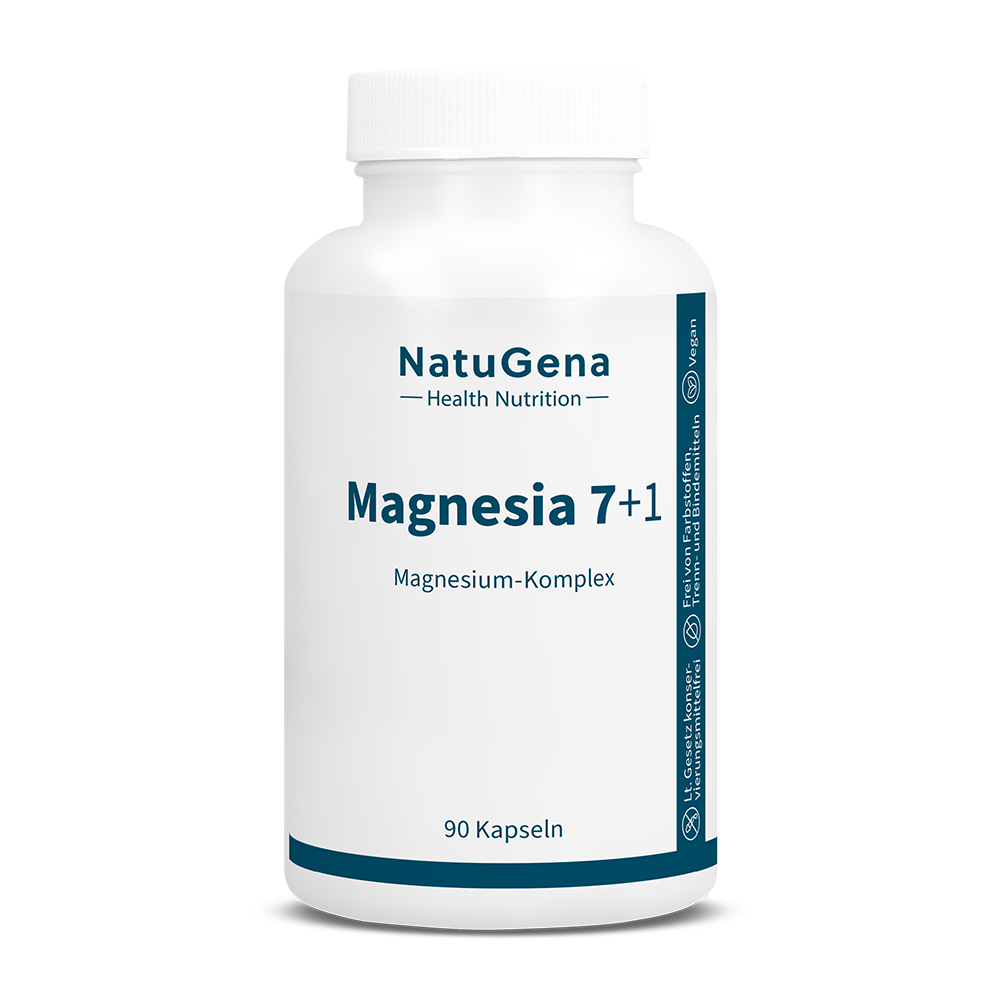
Magnesia 7+1
Magnesium Complex
Optimally balanced magnesium complex with 8 different magnesium compounds for comprehensive magnesium support.


29,95 €
Other Articles

22.10.2026 Redaktion
Blue Light and Sleep: How Our Daily Habits Disrupt the Sleep-Wake Cycle
Using smartphones, working on computers, and streaming TV series – especially right before bedtime – can interfere with the function of our pineal gland. Among other things, this small gland regulates the release of the hormone melatonin, which is normally produced in greater amounts as darkness falls in the evening.
Read more
16.10.2026 Redaktion
Daylight Saving Time and Sleep Problems: Why Does Your Internal Clock Resist the Time Change?
The alarm goes off, but your head feels heavy. Although the clocks are turned back by one hour in autumn, seemingly allowing more time for rest, your usual routine can be thrown off balance. Many people struggle to fall asleep in the evening or wake up feeling exhausted.
Read more
12.10.2026 Redaktion
Omega-3 for Children: What Parents Should Keep in Mind in Everyday Family Life
Many parents are familiar with situations like these: Their child seems restless, has difficulty concentrating, or quickly feels overwhelmed. Homework takes forever, attention constantly shifts, and at the same time, the child finds it difficult to relax.
Read more