
12.10.2026 Redaktion
Omega-3 for Children: What Parents Should Keep in Mind in Everyday Family Life
Many parents are familiar with situations like these: Their child seems restless, has difficulty concentrating, or quickly feels overwhelmed. Homework takes forever, attention constantly shifts, and at the same time, the child finds it difficult to relax. Of course, phases like these are, to a certain extent, a normal part of development.
Nevertheless, science and medicine are increasingly exploring the role that nutrition and certain nutrients may play in childhood development. Alongside a balanced diet, two components in particular are receiving attention: an adequate intake of fatty acids such as omega-3 for children and a sufficient supply of vitamin D.
Omega-3 for Kids – Why These Fats Are Important During Growth
Omega-3 fatty acids play an important role in childhood development. Docosahexaenoic acid, known as DHA, has a particularly important function. As a natural component of nerve cells and the retina, it is frequently associated with the brain, visual function, and cognitive development.
Since children are growing and their brains and nervous systems are developing particularly dynamically, an adequate dietary intake of omega-3 fatty acids is important. Good sources include oily sea fish, as well as DHA- and EPA-rich (eicosapentaenoic acid) algae oils as plant-based vegan alternatives. A balanced diet, age-appropriate dosage, and good tolerability should always be taken into consideration.
Age-Appropriate Omega-3 Intake for Children
There are reference values for the daily intake of omega-3 fatty acids based on age and body weight. For children, using body weight as a guideline can be useful, as growth and the development of the brain and cells continuously require energy and nutrients. From adolescence onwards, the focus generally shifts towards broader intake recommendations.
In general, the following recommendations apply to children:
| Body Weight | Recommended Daily Omega-3 Intake |
| Up to 9 kg | 257 mg |
| 17 kg | 515 mg |
| 35 kg | 1,030 mg |
However, body weight is only one factor to consider. Certain stages of life are associated with changing nutritional requirements. Needs may increase during growth spurts, intensive learning periods, stress, low fish consumption, increased physical activity, or an unfavorable baseline omega-3 status.
Modern Dietary Habits: Why Children Often Lack Omega-3
Many children today consume significantly more omega-6 than omega-3 fatty acids. This is often due to highly processed foods and a low intake of oily fish or other omega-3 sources, such as algae products. However, foods made from algae often contain varying amounts of iodine, which can lead to accidental excessive intake.
When omega-6 intake remains consistently high while omega-3 intake is low, the balance of fatty acids in the body may shift unfavorably. Both groups of fatty acids use similar metabolic pathways and serve as precursors for different signaling molecules. Omega-6 fatty acids can give rise to signaling molecules associated with inflammatory processes, while omega-3 fatty acids are more commonly discussed in connection with balanced inflammatory regulation.
What Role Does Omega-3 Play in Concentration and Learning?
The brain consists largely of fats. These are important building blocks of nerve cells and cell membranes. DHA plays a particularly central role. DHA is the most important omega-3 fatty acid in the brain and, depending on the brain region, accounts for approximately 10–20% of the total fatty acids or lipids in the brain. Its proportion is particularly high in gray matter and nerve cell membranes. This is why DHA is frequently discussed in relation to brain development, the nervous system, and normal brain function.
Scientific studies have been investigating for years whether omega-3 fatty acids may play a role in attention, concentration, and ADHD in children. There is some evidence suggesting that children with low omega-3 intake or an unfavorable fatty acid status may benefit from improved intake. However, omega-3 fatty acids should not be viewed as a standalone measure, but rather as part of a balanced diet and a holistic approach to supporting children.
Many parents also report noticing positive changes in everyday life when their children follow a balanced diet and receive an adequate supply of omega-3.
Micronutrients and ADHD: What Role Does Nutrition Play in Research?
ADHD is a complex condition involving many interacting factors. In addition to genetic, neurological, and psychosocial influences, lifestyle, nutrition, and nutrient intake are increasingly becoming areas of scientific interest.
Studies indicate that certain nutrient deficiencies may occur more frequently in affected children. The following micronutrients are of particular interest:
- Magnesium
- Iron
- Zinc
- Vitamin D
- Omega-3 fatty acids
Not every child with ADHD or concentration difficulties automatically has a nutrient deficiency. Nevertheless, studies suggest that certain deficiencies may be more common among affected children. It is therefore worth assessing each child's individual nutritional status, including appropriate blood tests.
Did You Know That You Can Measure Your Omega-3 Status with a Blood Test?
Specialized blood tests can be used to assess whether the supply of omega-3 fatty acids is sufficient. These tests primarily measure the proportion of the omega-3 fatty acids EPA and DHA.
Overlooked Micronutrients in Children: What Role Do Vitamin D and Minerals Play in Everyday Life?
The importance of vitamin D is often underestimated in children. Among other functions, it contributes to the normal function of the immune system and is important for bones and muscles. Since vitamin D is primarily produced through exposure to sunlight, low levels can occur particularly during the winter months. Children who spend little time outdoors, spend much of their time indoors, or were born during the darker months may be particularly affected by a deficiency.
Possible signs of an insufficient vitamin D supply may include concentration difficulties, rapid fatigue, susceptibility to infections, restlessness, mood swings, or sleep problems.
Deficiencies in iron, magnesium, and zinc may also be responsible for the symptoms mentioned above. In particular, young girls who menstruate often experience an unnoticed iron deficiency.
How Parents Can Find High-Quality Omega-3 Products for Their Kids
Good sources of omega-3 fatty acids include oily sea fish such as salmon and mackerel. However, many children eat very little fish or dislike its taste. As a result, many families turn to high-quality omega-3 supplements. When choosing suitable products, parents should pay particular attention to the following characteristics:
- EPA and DHA content appropriate for the child's age
- Purity and contaminant testing by independent laboratories
- Freshness of the oil, indicated by a neutral taste without rancid notes
- Plant-based alternatives such as algae oil as a source of DHA and EPA
The preferred form of supplementation depends on the child's preferences. While oils or drops make dosing easier, older children often prefer omega-3 capsules.
An omega-3 supplement for children works best when integrated into everyday family life. Nutrient intake is one important element alongside other influencing factors:
- Sufficient sleep to support physical and mental recovery
- Regular physical activity outdoors in the fresh air
- Structured screen time, especially before bedtime
Blue light from screens inhibits the body's natural release of melatonin in the evening. This can make falling asleep more difficult and reduce restorative sleep. Particularly when children experience concentration difficulties, it is therefore worth reviewing their evening routines, sleep quality, and screen time.
Omega-3 fatty acids, vitamin D, and other micronutrients can be understood as components of a comprehensive approach. Together with sufficient sleep, physical activity, clear daily routines, and mindful breaks from screens, they form a holistic concept.
Supporting Children Holistically: How Nutrition, Daily Habits, and Nutrients Work Together
A balanced supply of nutrients forms the foundation for children's growth and development. Omega-3 fatty acids for children fulfill specific functions in the development of the brain, nervous system, and vision. Vitamin D and other micronutrients are also frequently discussed in the context of concentration, energy, and childhood development.
Particularly when children experience concentration difficulties, restlessness, or ADHD, many parents are interested in the role of nutrition and nutrients. It is important to consider each child individually and not view any single measure as the only solution. A conscious approach to omega-3 intake can be a valuable component – integrated into a balanced diet, sufficient physical activity, restorative sleep, clear daily routines, and mindful screen time.
This creates a holistic approach that not only provides support in specific situations but can also meaningfully accompany children throughout their development, learning processes, and everyday challenges.
Frequently Asked Questions About Omega-3 for Children
Should Parents Give Their Children Omega-3?
Should Parents Give Their Children Omega-3?
Ideally, a balanced diet should cover daily nutritional requirements. If children rarely or never eat oily sea fish such as salmon, mackerel, or herring, their diet lacks direct sources of the fatty acids EPA and DHA. In such cases, supplements can help complement their daily nutrient intake.
At What Age Is Omega-3 Intake Suitable?
At What Age Is Omega-3 Intake Suitable?
Essential fatty acids are needed from infancy onwards. During the first few months, they are supplied through breast milk or infant formula. Once complementary feeding begins, liquid oils or drops can be mixed into pureed foods. From toddlerhood onwards, liquid products make dosing easier, while older children often prefer capsules.
How Much Omega-3 Do Children Need Per Day?
How Much Omega-3 Do Children Need Per Day?
The exact requirement depends on the child's age and body weight. For infants and toddlers, amounts starting at 100 to 250 mg of DHA per day are often sufficient. For growing children, the reference amount may increase to up to 1,000 mg of combined EPA and DHA, depending on body weight and developmental stage.
How Long Does It Take for Omega-3 Supplementation to Show Effects?
How Long Does It Take for Omega-3 Supplementation to Show Effects?
The incorporation of fatty acids into cell membranes occurs gradually. The body continuously incorporates EPA and DHA into tissues and red blood cells. Changes in the Omega-3 Index can generally be detected through blood testing after approximately two to three months of regular intake.
Can Children Consume Too Much Omega-3?
Can Children Consume Too Much Omega-3?
Significant excessive intake can occasionally cause gastrointestinal discomfort or loose stools. Parents should therefore follow the manufacturer's recommended intake and consult their pediatrician to adjust the daily dosage appropriately to the child's body weight.
What Are the Signs of Insufficient Omega-3 Intake in Children?
What Are the Signs of Insufficient Omega-3 Intake in Children?
A deficiency does not present itself through one specific symptom. Possible everyday signs range from dry skin and brittle nails to rapid fatigue or difficulties concentrating.
Is Omega-3 Suitable for Treating Constipation?
Is Omega-3 Suitable for Treating Constipation?
No, omega-3 fatty acids have no approved effect on digestion or intestinal transit. Dietary oils are not intended to be used as laxatives. In cases of persistent digestive problems, adequate fluid intake, fiber-rich foods, and physical activity should be prioritized.
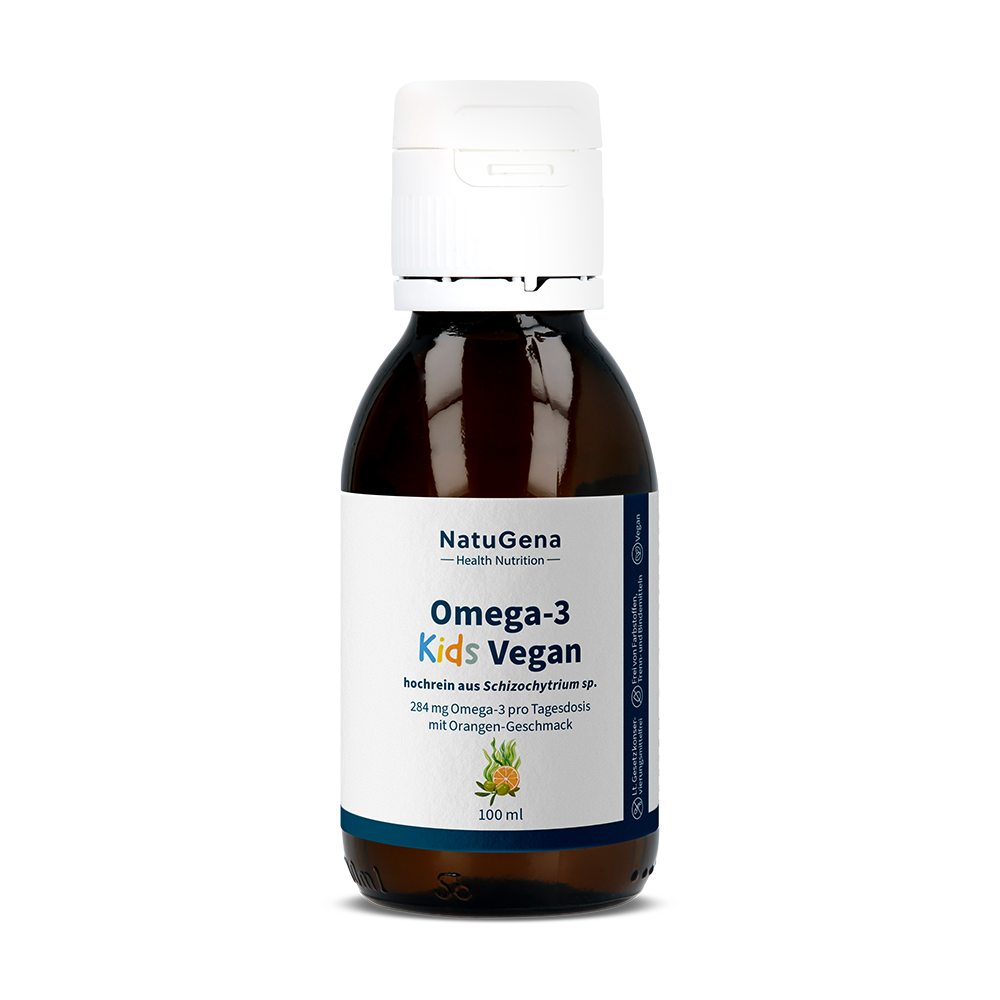
Omega 3 Kids Vegan
Algae oil & vitamin D from lichen
Plant-based algae oil with vitamin D, specially formulated for children from 4 years.


29,95 €
Other Articles

09.10.2026 Verena Christina Ewert, M.Sc., Ernährungs- und Mikronährstoffberaterin
Moringa: Why the Leaves Are Considered Nutrient-Rich
Moringa oleifera has been valued for centuries as a nutrient-rich plant. Its leaves are particularly interesting, as they combine a wide range of natural micronutrients, plant-based protein, and secondary plant compounds in a single food.
Read more
30.09.2026 Redaktion
Home Remedies for a Hangover: What Helps the Morning After
A pounding headache, an upset stomach, and a leaden fatigue after a long night are clear signs that your liver is working overtime. A hangover results from the breakdown of alcohol, the associated loss of fluids and minerals, and poor sleep quality. That may sound unpleasant, but it can be alleviated with a few simple steps.
Read more
28.09.2026 Magdalena Meier, M.Sc. Biologie
Endometriosis: Between Pain, Stigma, and Self-Care
Severe period pain, fatigue, digestive problems, or pain during sexual intercourse are still often dismissed as “normal.” For years, many affected people hear statements such as “That’s just part of having a period” or “You simply have to put up with it.” But pain that regularly interferes with school, work, relationships, or everyday life deserves attention.
Read more