• Mon–Fri 08:30–17:00
  • +49 841 90 255 000
  • +49 841 90 255 999
  • info@natugena.de
  • Login

Magnesium Oxide

Dead Sea
farbstofffrei glutenfrei laut Gesetz konservierungsmittelfrei laktosefrei trenn- und bindemittelfrei vegetarisch vegan

Nutritional Supplement

120 capsules (size 00) for 120 days

Magnesium compound with a particularly high content of elemental magnesium. 400 mg per daily dose.

19,95
Quantity Price
from 119,95 €
from 317,95 €
from 516,95 €
Orderable
Delivery time 3–5 workdays Article No.: 2018323
PPN/PZN: 11 20418718 91 (PZN = middle digits)
EAN: 4260633573234
base price: 209,12 € per Kilogramm
incl. 7% VAT, plus shipping costs

Magnesium Oxide 400 mg Dead Sea by NatuGena – Optimally dosed magnesium in oxide form providing 400 mg of magnesium per daily dose. This compound is characterised by a particularly high proportion of elemental magnesium, allowing a compact dosage with just one capsule per day. The formulation is derived from a natural source and complements daily magnesium intake in a simple way. 120 capsules for a 4-month supply.

  • ​Magnesium oxide: Magnesium compound with a particularly high proportion of elemental magnesium
  • Natural origin: Derived from mineral sources of the Dead Sea
  • Bioavailability: Slower and more sustained compared to other forms
  • Compact dosage: Only one capsule per day
  • Produced in Germany: Exceptional purity and bioavailability for optimal nutrient uptake

Magnesium is an essential mineral in the human body and is involved in numerous physiological processes. It contributes to normal muscle function and the normal functioning of the nervous system. It also supports normal energy-yielding metabolism and contributes to the reduction of tiredness and fatigue. In addition, magnesium contributes to electrolyte balance and supports the maintenance of normal bones. Magnesium also plays a role in the process of cell division.

What makes the Dead Sea a special source of magnesium?

The Dead Sea is considered one of the most mineral-rich bodies of water on Earth. Due to high evaporation rates and minimal water outflow, particularly high concentrations of various minerals have accumulated over thousands of years. Magnesium is one of the main mineral components of this region. The minerals obtained there have long been valued for their purity and composition.

What characterises magnesium oxide?

Magnesium oxide is a magnesium compound with a particularly high proportion of elemental magnesium. This allows a comparatively high magnesium dose to be provided in a single capsule. This compact dosage is particularly convenient for people who want to supplement their daily magnesium intake easily and efficiently.

Consumption recommendation

1 times a day 1 capsule. Optimal consumption is at least 30 minutes before or 80 minutes after a meal with 250 ml of still, lukewarm water. 

Notes

Food supplements should not be used as a substitute for a balanced and varied diet and a healthy lifestyle. Keep out of reach of small children. Store closed, in a cool, dry place away from light. Do not exceed the recommended daily intake stated.

Ingredients

Ingredients per
Tablet NRV¹
Magnesium 400 mg 107%

1 Nutrient Reference Value (NRV) for the average adult according to Regulation (EU) No. 1169/2011 (in %).

Composition

Magnesium oxide*, coating agent: Hydroxypropyl Methylcellulose (HPMC).

* Origin: Dead Sea

Not a medicinal product

Food supplement: Do not exceed the recommended daily intake stated. Not a substitute for a balanced and varied diet and a healthy lifestyle.

Pure substance principle

Only active ingredients (no excipients, no colorants, according to the law no preservatives, no technological additives such as binding and separating agents, no hidden additives, free of gluten, flavor enhancers, lactose, flavors, soy). Note: This product contains (in small traces) microcrystalline cellulose as a technological release and binding agent.

Legal notice

This product is for nutritional purposes and therefore does not affect the Heilmittelwerbegesetz (HWG). Good nutritional status is important for your general well-being. All statements made about the product describe properties and physiological effects that may naturally vary among consumers and do not represent any healing or health promises.

We offer a range of different magnesium salts. To understand the difference between them, we need to take a brief detour into chemistry. Elemental magnesium is always positively charged and must therefore find a negatively charged bonding partner in order to exist as a stable, balanced salt.

There are a wide variety of magnesium salts, but not all of them dissolve well in the body and are therefore able to release magnesium to our cells (bioavailability). We primarily offer highly bioavailable and organically bound forms of magnesium.

But why do we actually need magnesium in our bodies? We are all familiar with ‘calf cramps’ and know that magnesium can help with these. It can be said that magnesium acts on cramps in the body by promoting muscle relaxation, regulating calcium uptake into muscle cells and maintaining electrolyte balance. Furthermore, magnesium is involved in over 600 reactions in the body, making it a very important mineral for our bodies. In addition to the muscles, it also contributes to the maintenance of normal bones and teeth. It contributes to normal protein synthesis and plays a role in cell division.

We therefore need to provide our bodies with a form of magnesium that dissolves easily. Magnesium can, for example, be bound to citric acid (magnesium citrate) or taurine (magnesium taurate). When the magnesium salt dissolves in the body, we are not only supplied with magnesium but also with the corresponding binding partner. This leads to the following conclusions:

  • Magnesium citrate: magnesium + citric acid – highly soluble, may gently stimulate bowel function. Magnesium contributes to electrolyte balance and normal energy metabolism.
  • Magnesium malate: magnesium + malic acid – considered well tolerated, may gently stimulate bowel function. Magnesium also contributes to normal muscle function and to the reduction of tiredness and fatigue.
  • Magnesium ascorbate: magnesium + ascorbic acid (vitamin C) – focuses on vitamin C supply, highly soluble and gentle on the stomach.
  • Magtein® (magnesium L-threonate): Magnesium + L-threonic acid – special chemical structure, well tolerated, currently the subject of research in the field of cognitive function. Magnesium contributes to the normal functioning of the nervous system and to normal psychological function. Focus on the nervous system and as a supplement during periods of mental strain.
  • Magnesium (bis)glycinate: magnesium + the amino acid L-glycine – chelated form, very stable, very well tolerated. Magnesium also contributes to normal psychological function and to the normal functioning of the nervous system. Focus on the nervous system and psychological well-being; suitable for stress and inner restlessness; often preferred in the evening.
  • Magnesium taurate: magnesium + the amino acid taurine – stable chelate structure, well tolerated. Magnesium also contributes to normal muscle function. Focus on cardiac and vascular muscles.
  • Magnesium oxide – sourced from the Dead Sea with a particularly high content of elemental magnesium (60%).
We offer these forms of magnesium as individual supplements; in addition, we have the following combination products:
  • Magnesia 7+1 – our colourful blend of 7+1 magnesium salts (magnesium citrate, magnesium bisglycinate, magnesium malate, magnesium taurate, magnesium gluconate, magnesium lactate, magnesium phosphate, magnesium carbonate).
  • Calcium & Magnesium – calcium and magnesium contribute to normal muscle function and the maintenance of normal bones
  • Magnesium Malate & Glycinate – organic magnesium compounds with rapid absorption. Magnesium also contributes to normal muscle function, to the reduction of tiredness and fatigue, and to the normal functioning of the nervous system.

Further and more detailed information can be found in our blog article: Magnesium – a multi-talented nutrient

Summary: Magnesium must always find a binding partner and exist in the form of a salt. This binding partner, in turn, can offer benefits for the body or have effects on the target tissue. By carefully selecting the right magnesium salt, you can prioritise different areas of the body – for example, the muscles, heart, nerves, energy levels or cognitive function.

Which magnesium compound is best suited depends primarily on individual tolerability, the preferred time of intake, and the individual dietary situation.

For versatile magnesium supplementation

Those who want to combine different magnesium compounds can opt for a combination product. Magnesia 7+1 contains eight different magnesium salts, providing a broad-based magnesium supply.

Which form of magnesium is suitable for digestion?

Magnesium citrate and magnesium malate can mildly stimulate intestinal activity and soften the stool. They are therefore often preferred in cases of sluggish digestion.

Those who tend to have loose stools or diarrhea should initially use these forms with caution and can alternatively choose well-tolerated compounds such as magnesium bisglycinate or magnesium taurate.

Which form of magnesium is suitable at which time of day?

Magnesium citrate, magnesium malate, magnesium taurate, and magnesium L-threonate are often taken in the morning or during the day. Magnesium bisglycinate is often preferred in the evening due to its combination with the amino acid glycine.

Higher amounts of magnesium should ideally be divided into several smaller portions throughout the day. This can improve tolerability.

Our individual magnesium supplements at a glance
Product Description
Magnesium Citrate Magnesium + citric acid – highly soluble and can mildly stimulate intestinal activity. Magnesium contributes to electrolyte balance and normal energy metabolism.
Magnesium Malate Magnesium + malic acid – considered well tolerated and can mildly stimulate intestinal activity. Magnesium also contributes to normal muscle function and the reduction of tiredness and fatigue.
Magnesium Ascorbate Magnesium + ascorbic acid (vitamin C) – focus on vitamin C supplementation, highly soluble and gentle on the stomach.
Magtein® (Magnesium L-Threonate) Magnesium + L-threonic acid – special chemical structure, well tolerated, currently being researched in the cognitive field. Magnesium contributes to normal nervous system function and normal psychological function. Focus on the nervous system and supplementation during periods of mental strain.
Magnesium (bis)glycinate Magnesium + amino acid L-glycine – chelated form, highly stable and very well tolerated. Magnesium also contributes to normal psychological function and normal nervous system function. Focus on the nervous system and mental well-being; suitable during stress and inner restlessness, and often preferred in the evening.
Magnesium Taurate Magnesium + amino acid taurine – stable chelate structure, well tolerated. Magnesium also contributes to normal muscle function. Focus on cardiac and vascular muscle.
Magnesium Oxide obtained from the Dead Sea, with a particularly high proportion of elemental magnesium (60%).
Combination products
Product Description
Magnesia 7+1 our colorful blend of 7+1 magnesium salts (magnesium citrate, magnesium bisglycinate, magnesium malate, magnesium taurate, magnesium gluconate, magnesium lactate, magnesium phosphate, magnesium carbonate).
Calcium & Magnesium Calcium and magnesium contribute to normal muscle function and the maintenance of normal bones.
Magnesium Malate & Glycinate organic magnesium compounds with rapid absorption. Magnesium also contributes to normal muscle function, the reduction of tiredness and fatigue, and normal nervous system function.

Further information can be found in our blog article: Magnesium – a versatile all-rounder for muscles, nerves, and energy metabolism

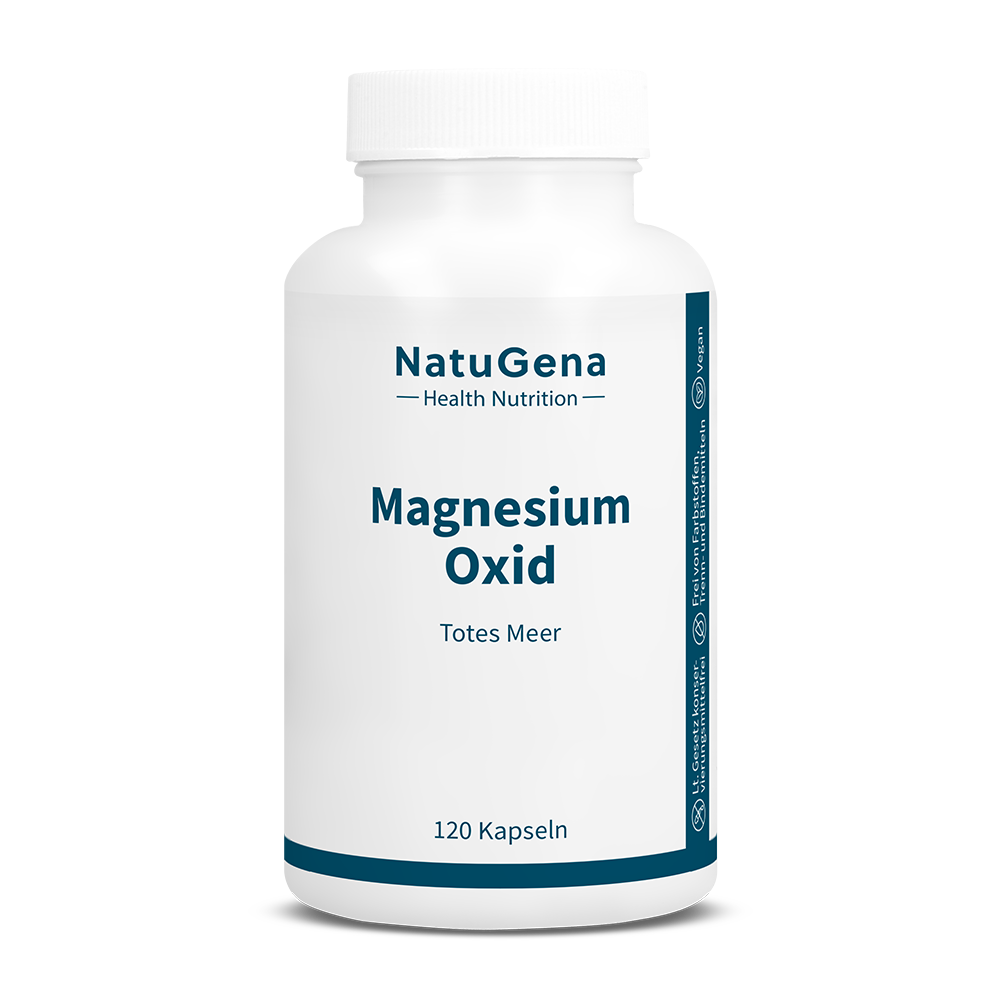
  • Organic magnesium compounds are generally highly soluble, are absorbed rapidly and are considered to be particularly well tolerated. They are particularly suitable for situations where there is an increased need for magnesium or where the digestive system is sensitive.
  • Inorganic magnesium compounds contain a high proportion of elemental magnesium and are released more slowly. They are particularly suitable for replenishing magnesium stores over the long term.

A combination of both forms may be beneficial in order to combine rapid availability with a sustained supply.

Depending on the compound, magnesium can have a laxative effect.
A common cause is that magnesium citrate draws water into the bowel, which can lead to diarrhoea.

Alternatives that are better tolerated:
  • Magnesium glycinate
  • Magnesium taurate
  • Magnesium threonate

These forms are particularly suitable for people with sensitive systems.

Magnesium Oxide 400 mg Dead Sea by NatuGena – Optimally dosed magnesium in oxide form providing 400 mg of magnesium per daily dose. This compound is characterised by a particularly high proportion of elemental magnesium, allowing a compact dosage with just one capsule per day. The formulation is derived from a natural source and complements daily magnesium intake in a simple way. 120 capsules for a 4-month supply.

  • ​Magnesium oxide: Magnesium compound with a particularly high proportion of elemental magnesium
  • Natural origin: Derived from mineral sources of the Dead Sea
  • Bioavailability: Slower and more sustained compared to other forms
  • Compact dosage: Only one capsule per day
  • Produced in Germany: Exceptional purity and bioavailability for optimal nutrient uptake

Magnesium is an essential mineral in the human body and is involved in numerous physiological processes. It contributes to normal muscle function and the normal functioning of the nervous system. It also supports normal energy-yielding metabolism and contributes to the reduction of tiredness and fatigue. In addition, magnesium contributes to electrolyte balance and supports the maintenance of normal bones. Magnesium also plays a role in the process of cell division.

What makes the Dead Sea a special source of magnesium?

The Dead Sea is considered one of the most mineral-rich bodies of water on Earth. Due to high evaporation rates and minimal water outflow, particularly high concentrations of various minerals have accumulated over thousands of years. Magnesium is one of the main mineral components of this region. The minerals obtained there have long been valued for their purity and composition.

What characterises magnesium oxide?

Magnesium oxide is a magnesium compound with a particularly high proportion of elemental magnesium. This allows a comparatively high magnesium dose to be provided in a single capsule. This compact dosage is particularly convenient for people who want to supplement their daily magnesium intake easily and efficiently.

Consumption recommendation

1 times a day 1 capsule. Optimal consumption is at least 30 minutes before or 80 minutes after a meal with 250 ml of still, lukewarm water. 

Notes

Food supplements should not be used as a substitute for a balanced and varied diet and a healthy lifestyle. Keep out of reach of small children. Store closed, in a cool, dry place away from light. Do not exceed the recommended daily intake stated.

Ingredients

Ingredients per
Tablet NRV¹
Magnesium 400 mg 107%

1 Nutrient Reference Value (NRV) for the average adult according to Regulation (EU) No. 1169/2011 (in %).

Composition

Magnesium oxide*, coating agent: Hydroxypropyl Methylcellulose (HPMC).

* Origin: Dead Sea

Not a medicinal product

Food supplement: Do not exceed the recommended daily intake stated. Not a substitute for a balanced and varied diet and a healthy lifestyle.

Pure substance principle

Only active ingredients (no excipients, no colorants, according to the law no preservatives, no technological additives such as binding and separating agents, no hidden additives, free of gluten, flavor enhancers, lactose, flavors, soy). Note: This product contains (in small traces) microcrystalline cellulose as a technological release and binding agent.

Legal notice

This product is for nutritional purposes and therefore does not affect the Heilmittelwerbegesetz (HWG). Good nutritional status is important for your general well-being. All statements made about the product describe properties and physiological effects that may naturally vary among consumers and do not represent any healing or health promises.

We offer a range of different magnesium salts. To understand the difference between them, we need to take a brief detour into chemistry. Elemental magnesium is always positively charged and must therefore find a negatively charged bonding partner in order to exist as a stable, balanced salt.

There are a wide variety of magnesium salts, but not all of them dissolve well in the body and are therefore able to release magnesium to our cells (bioavailability). We primarily offer highly bioavailable and organically bound forms of magnesium.

But why do we actually need magnesium in our bodies? We are all familiar with ‘calf cramps’ and know that magnesium can help with these. It can be said that magnesium acts on cramps in the body by promoting muscle relaxation, regulating calcium uptake into muscle cells and maintaining electrolyte balance. Furthermore, magnesium is involved in over 600 reactions in the body, making it a very important mineral for our bodies. In addition to the muscles, it also contributes to the maintenance of normal bones and teeth. It contributes to normal protein synthesis and plays a role in cell division.

We therefore need to provide our bodies with a form of magnesium that dissolves easily. Magnesium can, for example, be bound to citric acid (magnesium citrate) or taurine (magnesium taurate). When the magnesium salt dissolves in the body, we are not only supplied with magnesium but also with the corresponding binding partner. This leads to the following conclusions:

  • Magnesium citrate: magnesium + citric acid – highly soluble, may gently stimulate bowel function. Magnesium contributes to electrolyte balance and normal energy metabolism.
  • Magnesium malate: magnesium + malic acid – considered well tolerated, may gently stimulate bowel function. Magnesium also contributes to normal muscle function and to the reduction of tiredness and fatigue.
  • Magnesium ascorbate: magnesium + ascorbic acid (vitamin C) – focuses on vitamin C supply, highly soluble and gentle on the stomach.
  • Magtein® (magnesium L-threonate): Magnesium + L-threonic acid – special chemical structure, well tolerated, currently the subject of research in the field of cognitive function. Magnesium contributes to the normal functioning of the nervous system and to normal psychological function. Focus on the nervous system and as a supplement during periods of mental strain.
  • Magnesium (bis)glycinate: magnesium + the amino acid L-glycine – chelated form, very stable, very well tolerated. Magnesium also contributes to normal psychological function and to the normal functioning of the nervous system. Focus on the nervous system and psychological well-being; suitable for stress and inner restlessness; often preferred in the evening.
  • Magnesium taurate: magnesium + the amino acid taurine – stable chelate structure, well tolerated. Magnesium also contributes to normal muscle function. Focus on cardiac and vascular muscles.
  • Magnesium oxide – sourced from the Dead Sea with a particularly high content of elemental magnesium (60%).
We offer these forms of magnesium as individual supplements; in addition, we have the following combination products:
  • Magnesia 7+1 – our colourful blend of 7+1 magnesium salts (magnesium citrate, magnesium bisglycinate, magnesium malate, magnesium taurate, magnesium gluconate, magnesium lactate, magnesium phosphate, magnesium carbonate).
  • Calcium & Magnesium – calcium and magnesium contribute to normal muscle function and the maintenance of normal bones
  • Magnesium Malate & Glycinate – organic magnesium compounds with rapid absorption. Magnesium also contributes to normal muscle function, to the reduction of tiredness and fatigue, and to the normal functioning of the nervous system.

Further and more detailed information can be found in our blog article: Magnesium – a multi-talented nutrient

Summary: Magnesium must always find a binding partner and exist in the form of a salt. This binding partner, in turn, can offer benefits for the body or have effects on the target tissue. By carefully selecting the right magnesium salt, you can prioritise different areas of the body – for example, the muscles, heart, nerves, energy levels or cognitive function.

Which magnesium compound is best suited depends primarily on individual tolerability, the preferred time of intake, and the individual dietary situation.

For versatile magnesium supplementation

Those who want to combine different magnesium compounds can opt for a combination product. Magnesia 7+1 contains eight different magnesium salts, providing a broad-based magnesium supply.

Which form of magnesium is suitable for digestion?

Magnesium citrate and magnesium malate can mildly stimulate intestinal activity and soften the stool. They are therefore often preferred in cases of sluggish digestion.

Those who tend to have loose stools or diarrhea should initially use these forms with caution and can alternatively choose well-tolerated compounds such as magnesium bisglycinate or magnesium taurate.

Which form of magnesium is suitable at which time of day?

Magnesium citrate, magnesium malate, magnesium taurate, and magnesium L-threonate are often taken in the morning or during the day. Magnesium bisglycinate is often preferred in the evening due to its combination with the amino acid glycine.

Higher amounts of magnesium should ideally be divided into several smaller portions throughout the day. This can improve tolerability.

Our individual magnesium supplements at a glance
Product Description
Magnesium Citrate Magnesium + citric acid – highly soluble and can mildly stimulate intestinal activity. Magnesium contributes to electrolyte balance and normal energy metabolism.
Magnesium Malate Magnesium + malic acid – considered well tolerated and can mildly stimulate intestinal activity. Magnesium also contributes to normal muscle function and the reduction of tiredness and fatigue.
Magnesium Ascorbate Magnesium + ascorbic acid (vitamin C) – focus on vitamin C supplementation, highly soluble and gentle on the stomach.
Magtein® (Magnesium L-Threonate) Magnesium + L-threonic acid – special chemical structure, well tolerated, currently being researched in the cognitive field. Magnesium contributes to normal nervous system function and normal psychological function. Focus on the nervous system and supplementation during periods of mental strain.
Magnesium (bis)glycinate Magnesium + amino acid L-glycine – chelated form, highly stable and very well tolerated. Magnesium also contributes to normal psychological function and normal nervous system function. Focus on the nervous system and mental well-being; suitable during stress and inner restlessness, and often preferred in the evening.
Magnesium Taurate Magnesium + amino acid taurine – stable chelate structure, well tolerated. Magnesium also contributes to normal muscle function. Focus on cardiac and vascular muscle.
Magnesium Oxide obtained from the Dead Sea, with a particularly high proportion of elemental magnesium (60%).
Combination products
Product Description
Magnesia 7+1 our colorful blend of 7+1 magnesium salts (magnesium citrate, magnesium bisglycinate, magnesium malate, magnesium taurate, magnesium gluconate, magnesium lactate, magnesium phosphate, magnesium carbonate).
Calcium & Magnesium Calcium and magnesium contribute to normal muscle function and the maintenance of normal bones.
Magnesium Malate & Glycinate organic magnesium compounds with rapid absorption. Magnesium also contributes to normal muscle function, the reduction of tiredness and fatigue, and normal nervous system function.

Further information can be found in our blog article: Magnesium – a versatile all-rounder for muscles, nerves, and energy metabolism
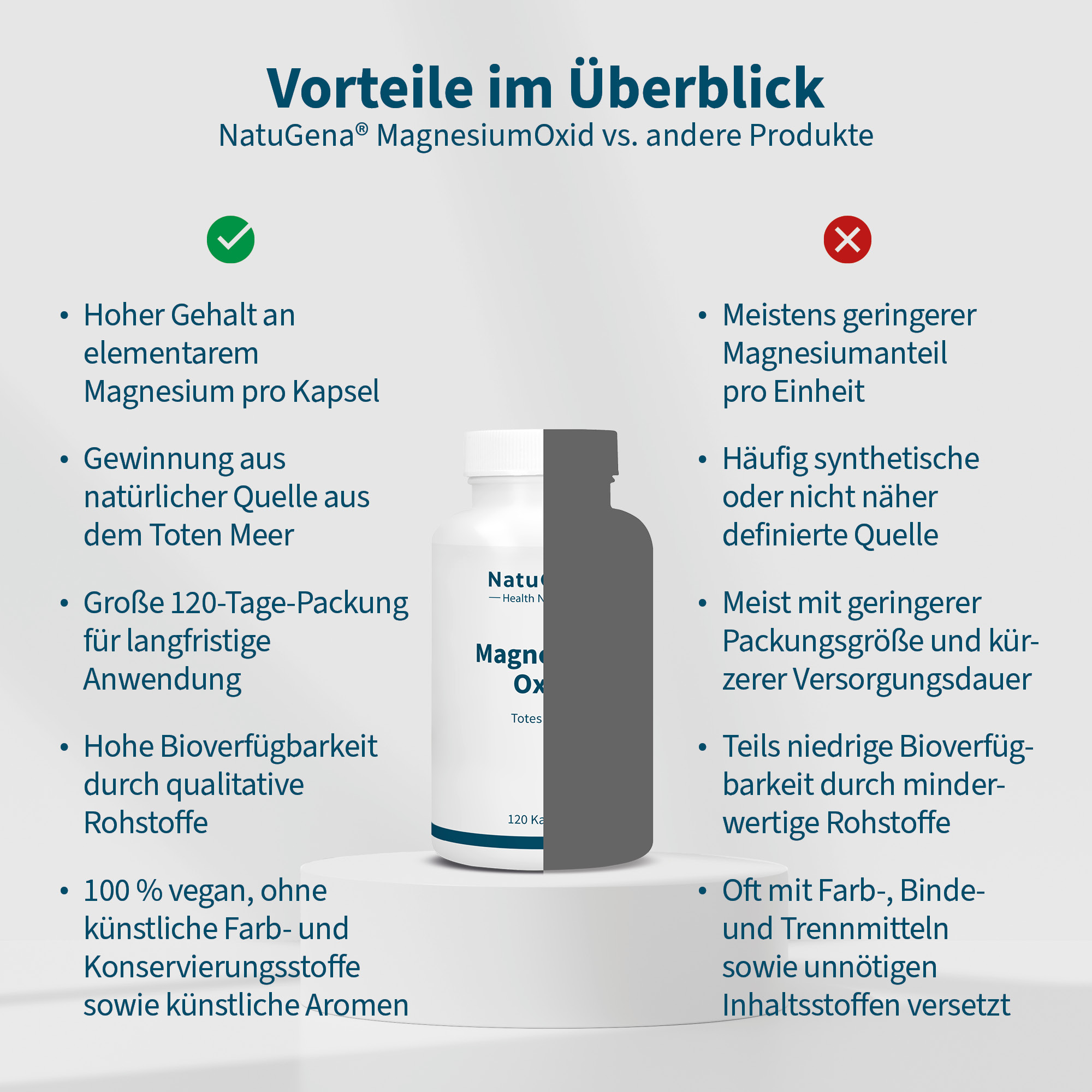
  • Organic magnesium compounds are generally highly soluble, are absorbed rapidly and are considered to be particularly well tolerated. They are particularly suitable for situations where there is an increased need for magnesium or where the digestive system is sensitive.
  • Inorganic magnesium compounds contain a high proportion of elemental magnesium and are released more slowly. They are particularly suitable for replenishing magnesium stores over the long term.

A combination of both forms may be beneficial in order to combine rapid availability with a sustained supply.

Depending on the compound, magnesium can have a laxative effect.
A common cause is that magnesium citrate draws water into the bowel, which can lead to diarrhoea.

Alternatives that are better tolerated:
  • Magnesium glycinate
  • Magnesium taurate
  • Magnesium threonate

These forms are particularly suitable for people with sensitive systems.

Responsible person for the EU

The economic operator based in the EU responsible for this product:

NatuGena GmbH
Münchener Str. 149, 85051 Ingolstadt, Deutschland

+49 841 90 255 000
info@natugena.de
https://www.natugena.de (Please note: By clicking on this link, you may leave natugena.de and be redirected to an external website. Please note that we are not responsible for the content of these websites.)

This could be interesting to you