• Mon–Fri 08:30–17:00
  • +49 841 90 255 000
  • +49 841 90 255 999
  • info@natugena.de
  • Login

N-Zymarase® Komplex

15 different enzymes, betaine, bromelain & papain
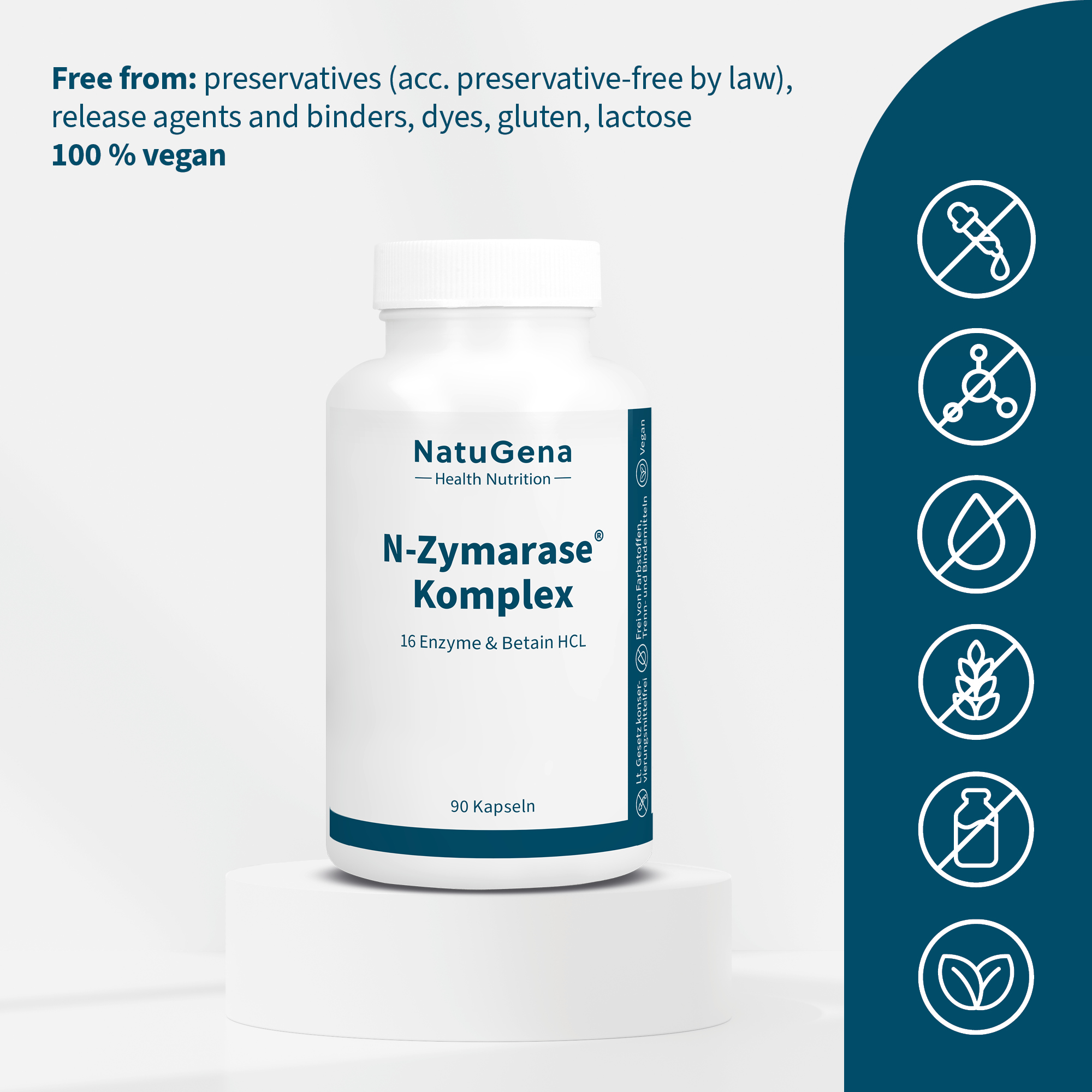
farbstofffrei glutenfrei laut Gesetz konservierungsmittelfrei laktosefrei trenn- und bindemittelfrei vegetarisch vegan

Nutritional Supplement

90 capsules (size 00) for 30 days

Combines 16 specifically selected enzymes with betaine HCl, natural bromelain and papain.

39,95
Quantity Price
from 139,95 €
from 335,95 €
from 533,95 €
Orderable
Delivery time 3–5 workdays Article No.: 2018169
PPN/PZN: 11 19233971 95 (PZN = middle digits)
EAN: 4260633571698
base price: 650,44 € per Kilogramm
incl. 7% VAT, plus shipping costs

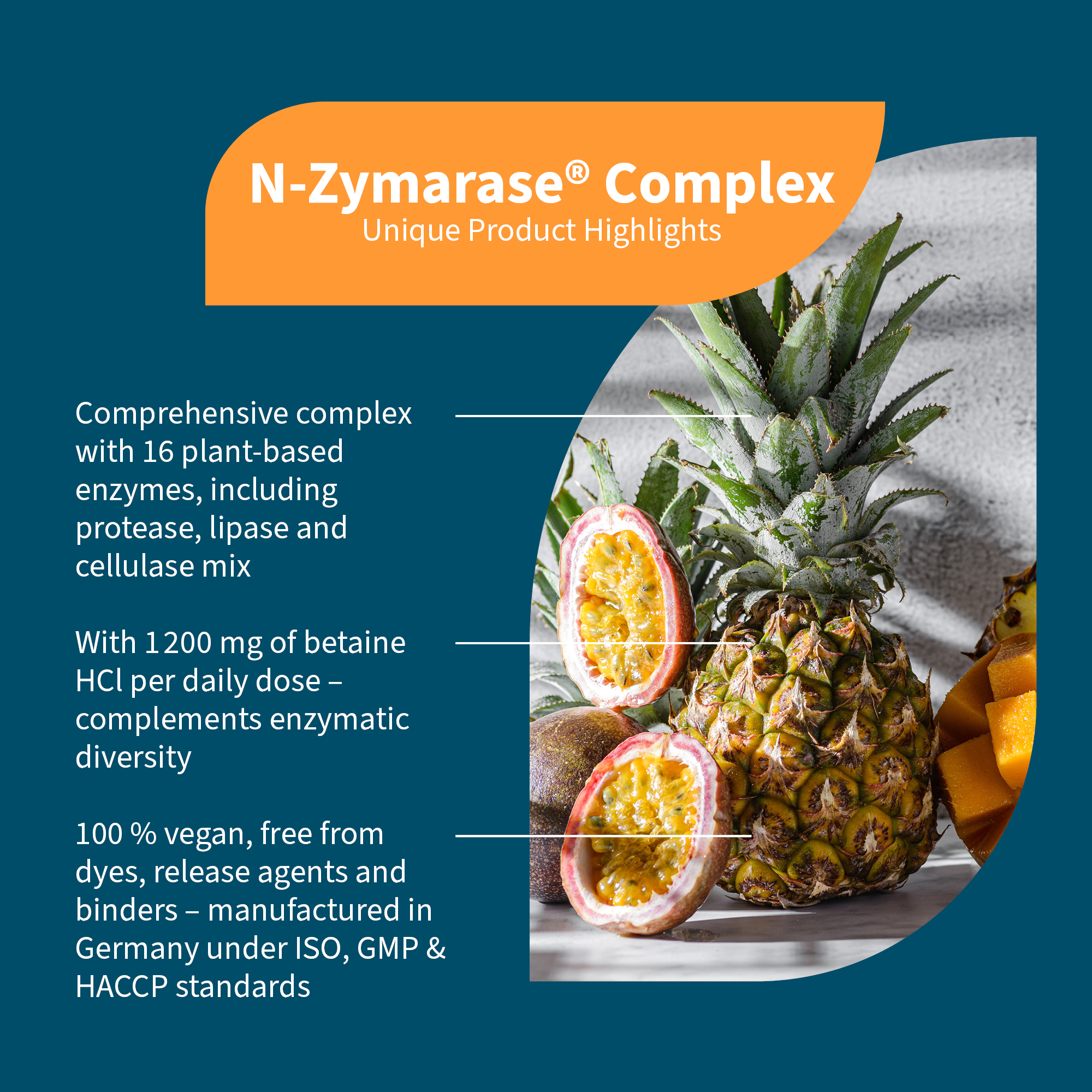
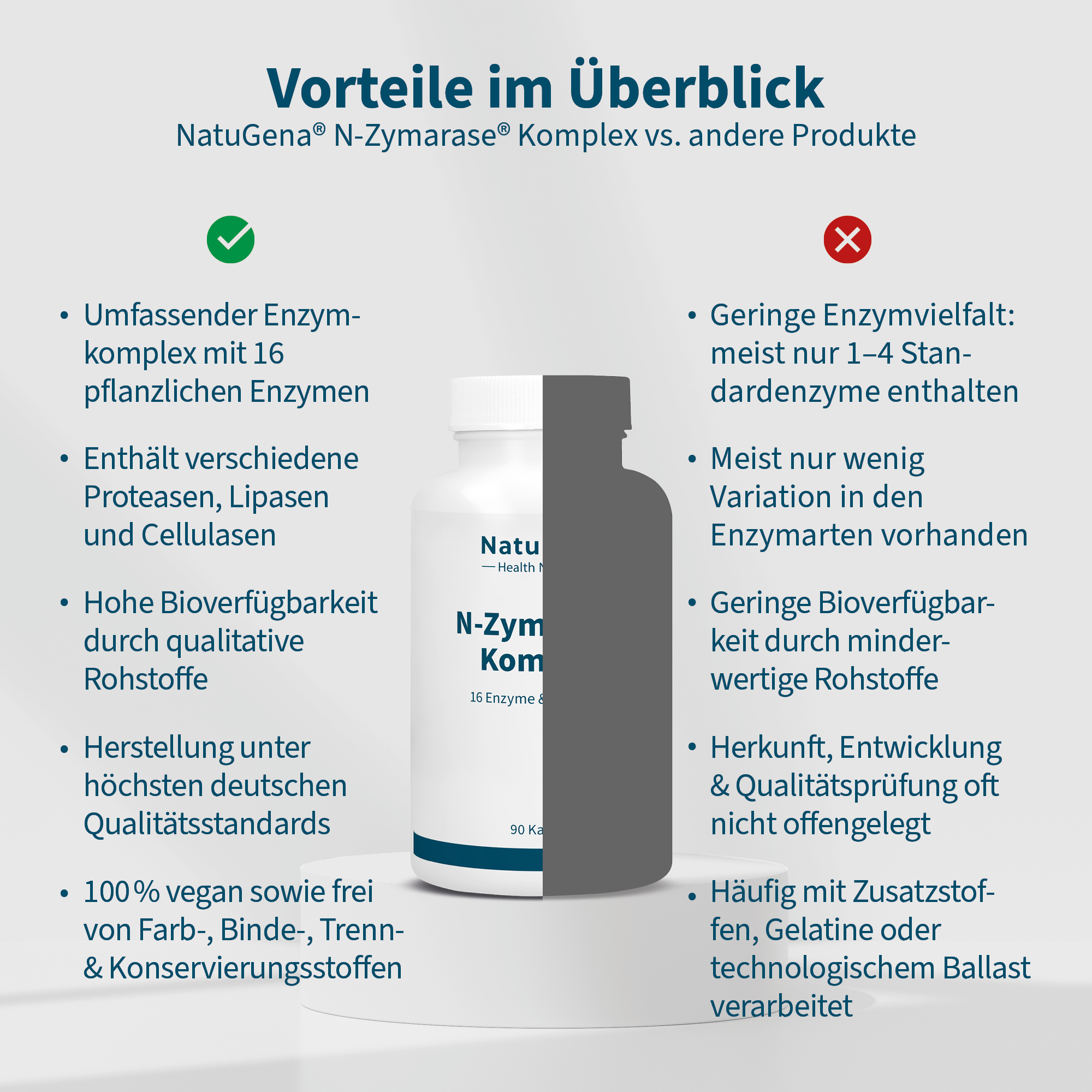
N-Zymarase® Complex by NatuGena – Comprehensive enzyme and betaine complex. This complex combines 16 specifically selected enzymes with betaine HCl and natural bromelain and papain. The enzyme blend covers multiple enzyme classes – including proteases, lipases, cellulases, and carbohydrate-degrading enzymes. Suitable for anyone seeking broad-spectrum enzymatic support – vegan, lactose-free and gluten-free. 90 capsules for a 30-day supply.

  • Betaine HCl: 1,200 mg of betaine HCl per daily dose
  • Lipase I & II: includes both lipase and cellulase mix (types I and II)
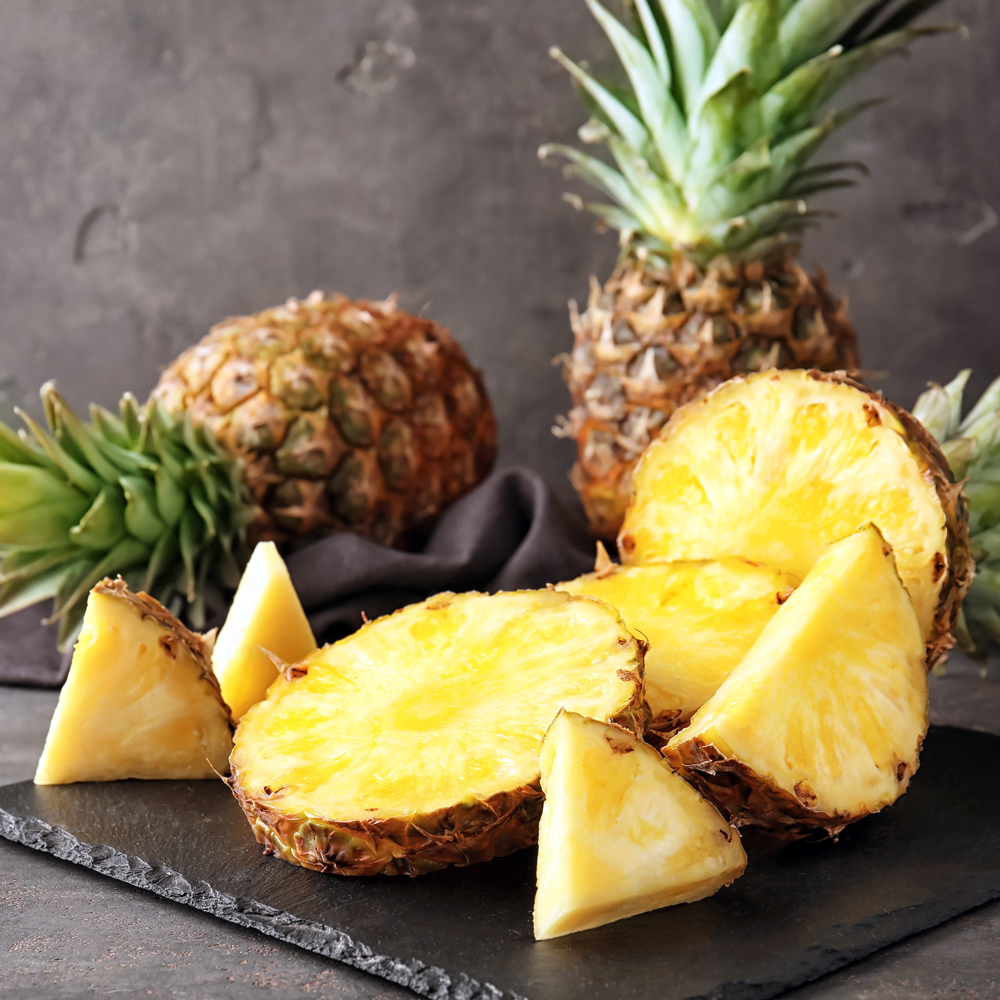
  • Bromelain – enzyme from pineapple: derived from the stem and juice of the pineapple plant
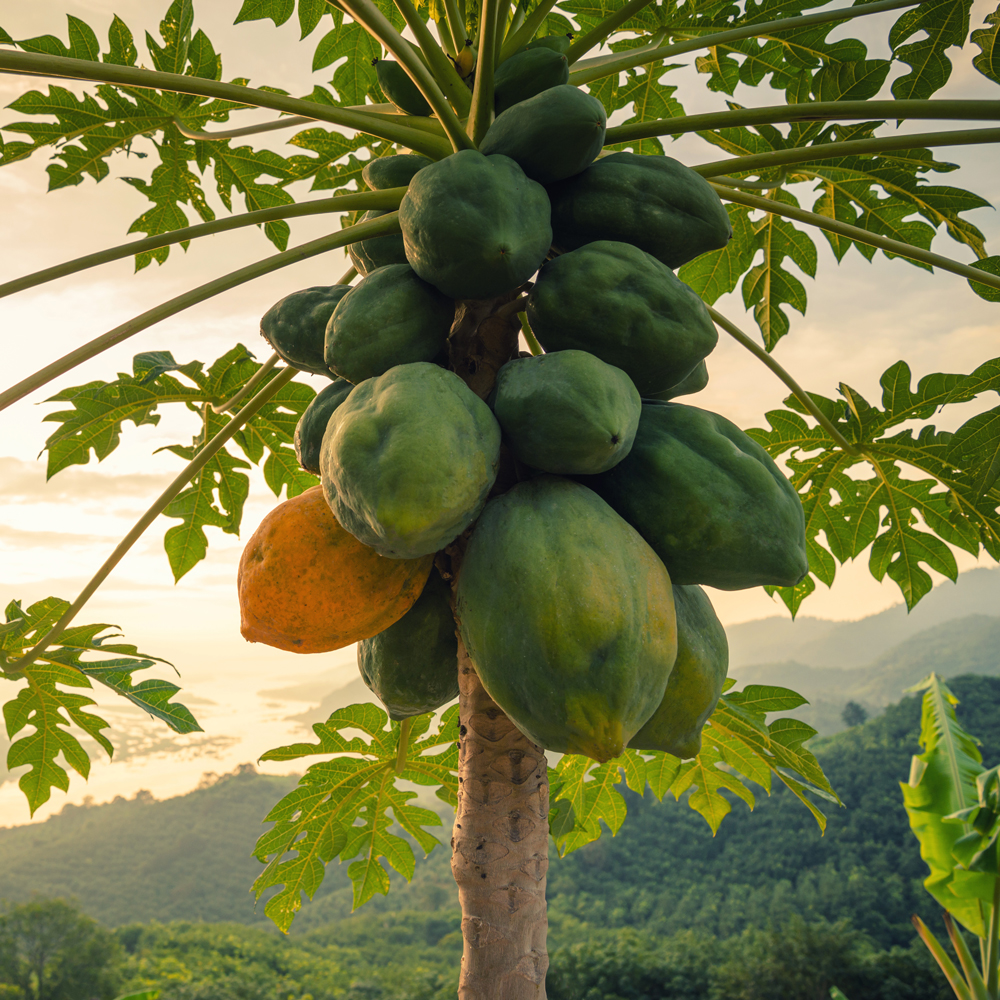
  • Papain – enzyme from papaya: extracted from the latex of the papaya fruit, traditionally valued in tropical regions
  • Made in Germany: exceptional purity and bioavailability for optimal nutrient uptake

A balanced diet can be usefully supported by targeted supplementation, especially with meals rich in protein, fat or fibre. N-Zymarase® Complex combines plant-derived and microbially produced enzymes, each active at different pH levels. This enables adaptation to the various stages of digestion and complements the natural enzyme diversity in the diet, particularly beneficial with rich or unbalanced meals.

What makes this complex special?

N-Zymarase® Complex includes a well-designed combination of digestive enzymes – including protease, peptidase, lactase and a dual-formulated lipase and cellulase mix.

The latter combine two variants each to optimally address both plant cell structures and fat-containing food components. The formula is completed with betaine HCl – an acid-forming compound that supports natural gastric acid and is especially valued with high-protein diets.

What is special about bromelain and papain?

Bromelain, derived from the juice and stems of pineapple, brings a touch of tropical diversity to our enzyme blend. This fruit, originally from South America, was highly prized by indigenous peoples for its sweet taste. Papain, from papaya, was already appreciated by the Maya. Both enzymes enrich the complex with their natural properties.

Together with microbially derived enzymes, they form a versatile combination of enzymatic activities similar to those found in fermented foods.

Our Commitment to Quality and Purity

At NatuGena, the purity and quality of our products are of utmost importance.

Our goal is to create highly effective food supplements with uncompromising quality, combining the best of science and nature.

From raw material to final packaging, every step undergoes stringent controls to meet our purity standards.

  • Premium raw materials in pure form, sourced directly from selected producers
  • Free from magnesium stearate, carrageenan, PEG, nanoparticles, GMOs, and synthetic additives
  • Scientifically validated formulas for optimal bioavailability
  • Regular, independent testing for residues, heavy metals, and pesticides
  • Ultra-pure HPMC capsule shells, 100% free from carrageenan and PEG
  • Manufactured in accordance with German quality standards (GMP, HACCP, ISO 9001)

Ingredients

Ingredients per daily dose
Betaine 1 200 mg
Enzyme blend, of which 450 mg
- Protease 210 000 HUT
- Protease 3. 0 75 SAPU
- Cellulase blend 6 000 CU
- Beta glucanase 12 BGU
- Glucoamylase 5 505 DU
- Diastase 7 500 DP
- Lactase 2 850 ALU
- Lipase Blend 7 155 FIP
- Bromelain 300 GDU
- Papain 4 950 TU
- Pectinase 50- endo PGU
- Xylanase 1 800 XU
- Alpha Galactosidose 300 GALU
- Peptidase 75 DPPIV
- Phytase 30 FTU
- Hemicellulase 4 500 HCU
Invertase (100 000 SU/g) 7,5 mg

Composition

Betaine, enzyme blend with Full Spectrum Protease (Protease 70 000 HUT; Protease 3. 0 25 SAPU; cellulase blend 2000 CU; beta glucanase 4 BGU; glucoamylase 1835 DU; diastase 2500 DP; lactase 950 ALU; lipase blend 2385 FIP; bromelain100 GDU; papain 1650 TU; pectinase 50-endo PGU; xylanase 600 XU; alpha galactosidose 100 GALU; peptidase 25 DPPIV; phytase 10 FTU; hemicellulase 1500 HCU), capsule shell: Hydroxypropylmethylcellulose, Invertase 100 000 SU/g.

No further information available.

Which enzyme product is right for which need?

The N-Zymarase products differ primarily in terms of when they should be taken and the specific focus of their formulation. While N-Zymarase Complex and N-Zymarase Intest are designed to support digestion after a meal, N-Zymarase Fructose and N-Zymarase Gluten complement these products for specific needs. N-Zymarase Inflam holds a special place within the product family.

Which is a classic digestive enzyme product to take with a meal?

For a classic digestive enzyme complex, the following three enzymes form a good foundation:

  • Bromelain for breaking down proteins
  • Papain to support protein digestion
  • Lipase for breaking down dietary fats

All three enzymes are included in the following products. Here’s a quick overview of the differences:

  • N-Zymarase Complex - 16 enzymes plus betaine HCl - an exceptionally broad spectrum of enzymes for the digestion of carbohydrates, fats, and proteins
  • N-Zymarase Intest - 8 enzymes - comprehensive digestive support with a focus on fat digestion
  • Bromelain 1200 - 3 enzymes - focuses on highly active bromelain
When are N-Zymarase Gluten and N-Zymarase Fructose recommended?

N-Zymarase Fructose is a specialized product for meals where fructose is the primary focus. It contains the enzyme glucose isomerase, which converts fructose into glucose, supplemented by L-glutamine, vitamins B7 and B9, and zinc, among other ingredients; therefore, it does not replace a broad-spectrum digestive enzyme complex but rather specifically complements it.
Depending on the composition of the meal, N-Zymarase Fructose can be combined with N-Zymarase Complex or N-Zymarase Intest.

N-Zymarase Gluten is designed to enzymatically break down gluten-containing components of a meal, featuring the specific digestive enzyme “Tolerase G” for breaking down gluten, as well as fennel, caraway, and ginger. This product is not a substitute for a gluten-free diet in cases of diagnosed celiac disease.
If needed, N-Zymarase Gluten can be taken with a meal in combination with N-Zymarase Complex or N-Zymarase Intest.

How does N-Zymarase Inflam differ from digestive enzymes?

N-Zymarase Inflam is not designed as a traditional digestive enzyme complex to be taken with meals. In addition to bromelain and papain, it contains the specific enzymes trypsin and rutin. It is recommended to take N-Zymarase Inflam between meals, as this allows the enzymes to be distributed more effectively throughout the body.


NatuGena’s enzyme supplements for the digestion of proteins, carbohydrates, gluten, lactose, and other dietary challenges—for a healthy gut!

  • N-Zymarase Complex: 16 enzymes plus betaine HCl—for a particularly broad spectrum of enzymes to take with meals.
  • N-Zymarase Intest: 8 digestive enzymes—compact support for the digestion of protein, fat, and carbohydrates.
  • Bromelain 1200: Bromelain, papain, and lipase—with a focus on highly active bromelain.
  • N-Zymarase Fructose: a targeted supplement for meals containing fructose.
  • N-Zymarase Gluten: with Tolerase® G for the enzymatic breakdown of gluten. Not suitable for people with celiac disease.
  • N-Zymarase Inflam: bromelain, papain, trypsin, and rutin—not a traditional digestive enzyme; take between meals.

Each enzyme has its own optimal units of measurement. The enzymatic activity of bromelain, for example, is expressed in GDU (Gelatin Digesting Units). This corresponds to the ability to digest gelatin under controlled experimental conditions.

Another example is provided by the so-called HUT units (Hemoglobin Unit Tyrosine base) of the enzyme protease. These units measure the amount of enzyme required to digest a specific amount of tyrosine-releasing peptide bonds from a hemoglobin-containing substrate under standardized conditions.

To provide you with the most meaningful information possible regarding the individual enzymatic activities, the units of measurement for each enzyme may differ from one another.

Unfortunately, it is not possible to convert enzyme units into other units, as they are determined experimentally.

NatuGena’s enzyme supplements for the digestion of proteins, carbohydrates, gluten, lactose, and other challenges—generally for a healthy gut!

No. N-Zymarase Intest contains 8 enzymes, while N-Zymarase Complex contains 16 enzymes. Both contain bromelain, papain, protease, lipase, lactase, glucoamylase, and invertase, as well as a starch-digesting enzyme—amylase or diastase. N-Zymarase Complex also contains betaine HCl.

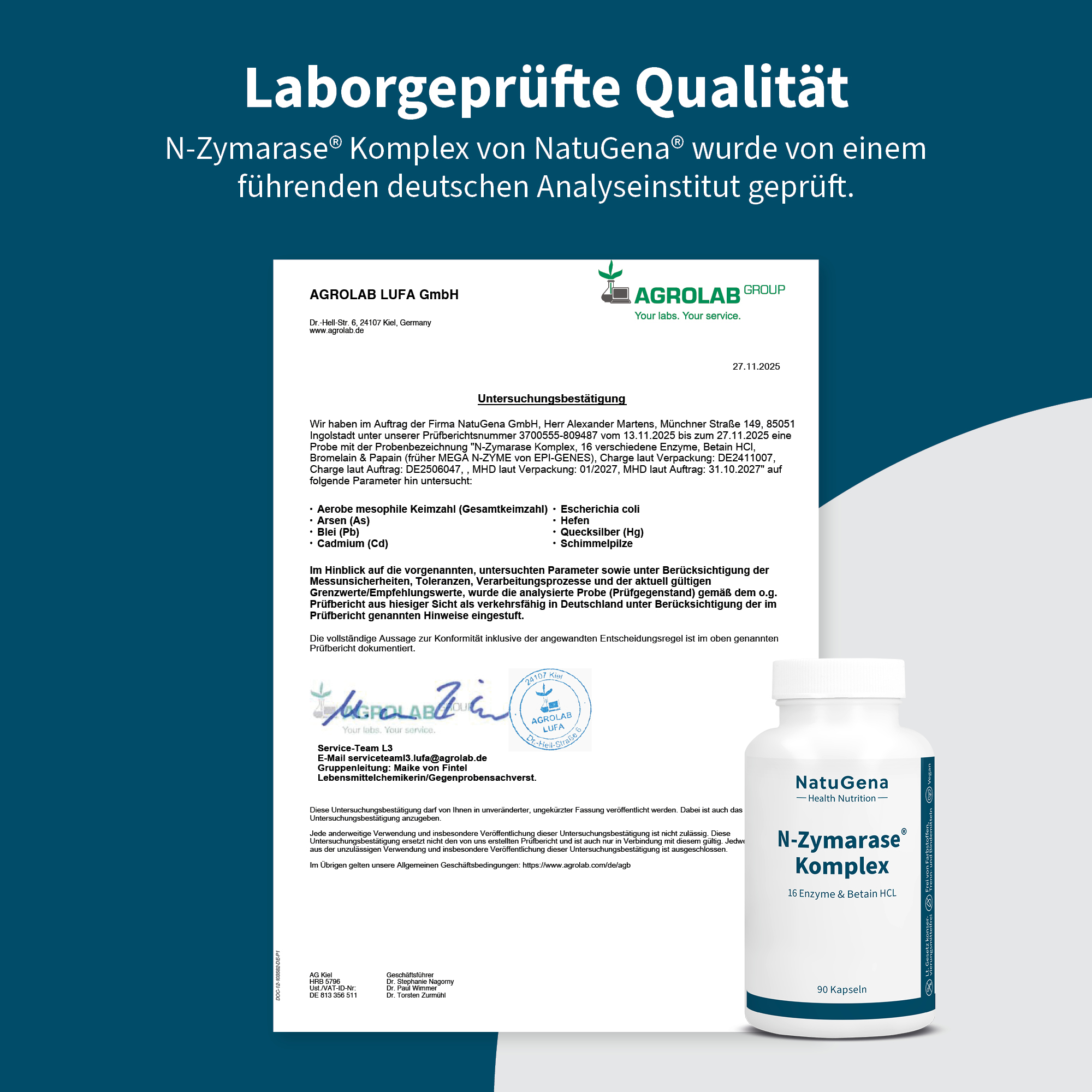
We work with the independent laboratory AgroLab, which we commission to perform microbiological and heavy metal tests.

In our microbiological testing, we measure the aerobic mesophilic plate count (total plate count), as well as the levels of Escherichia coli (E. coli), yeasts, Salmonella, molds, and staphylococci.

For heavy metals, we test for arsenic, lead, cadmium, and mercury in accordance with the limit values specified in Regulation (EU) 2023/915.

The optimal duration of use depends on the specific nutrient, your initial situation, diet, and individual requirements.

There is therefore no one-size-fits-all recommendation for how long a product should be taken. For products intended to support nutrient intake over a longer period, use over several weeks to months may be appropriate. In many cases, a period of around three months may be suitable before nutrient status and further requirements are reassessed.

In the case of diagnosed deficiencies, medical conditions, or the use of medication, the use of supplements should be individually discussed with a doctor or qualified healthcare professional.

The optimal time to take a supplement depends on the specific nutrient, individual tolerance, and the composition of the product. However, some ingredients can be particularly well suited to certain times of day or meals.

In the morning

Stimulating ingredients are often preferably taken in the morning or during the first half of the day. These include, for example:

  • Coenzyme Q10
  • Green tea extract
  • Certain B vitamins

Especially for sensitive individuals, it may be advisable to avoid taking stimulating ingredients immediately before bedtime.

Throughout the day

For some nutrients, it may be beneficial to divide the daily amount into several doses.

Water-soluble vitamins such as B vitamins and vitamin C can be taken throughout the day.

Magnesium can also be divided into several doses rather than taking the entire daily amount at once. This may improve tolerance, particularly with higher amounts.

In the evening

Depending on the type of magnesium compound, taking it in the evening may be beneficial. Magnesium glycinate, for example, is often preferably taken in the evening.

In general, however, the best time to take a product also depends on when it is individually best tolerated and can be reliably incorporated into your daily routine.

With a meal

Some nutrients benefit from being taken together with a meal.

Fat-soluble vitamins A, D, E, and K can be taken together and ideally with a meal containing some fat.

Omega-3 fatty acids should also be taken regularly with a meal. Omega-3 oils can be combined well with fat-soluble vitamins.

Many plant-based ingredients can also be taken as part of a meal or together with omega-3 products. However, the optimal timing depends on the specific plant compound and product formulation.

Zinc can cause nausea or stomach discomfort on an empty stomach in some people. If you have a sensitive stomach, it is therefore advisable to take zinc with a meal.

Between meals

Iron is often taken separately from meals, as various foods and beverages can affect its absorption. It is particularly advisable to leave a gap between iron and:

  • Coffee and tea
  • Caffeinated beverages
  • Milk and dairy products
  • Calcium- or mineral-rich supplements

However, if you have a sensitive stomach, iron can also be taken with a meal. In this case, individual tolerance is more important than a theoretically optimal intake situation.

Enzyme supplements vary depending on their intended use: digestive enzymes are generally taken with meals. Products that are specifically intended to be taken between meals may, for example, be taken around 30 minutes before a meal. The product's specific recommended intake should always be followed.

Around exercise

Proteins and amino acids can be taken both before and after training.

If you exercise on an empty stomach, taking them around 30 minutes before training may be beneficial. If you have already eaten a protein-rich meal, you can also plan your protein intake for after training.

In general, ensuring sufficient protein intake throughout the entire day is more important than adhering to a narrow time window around your workout.

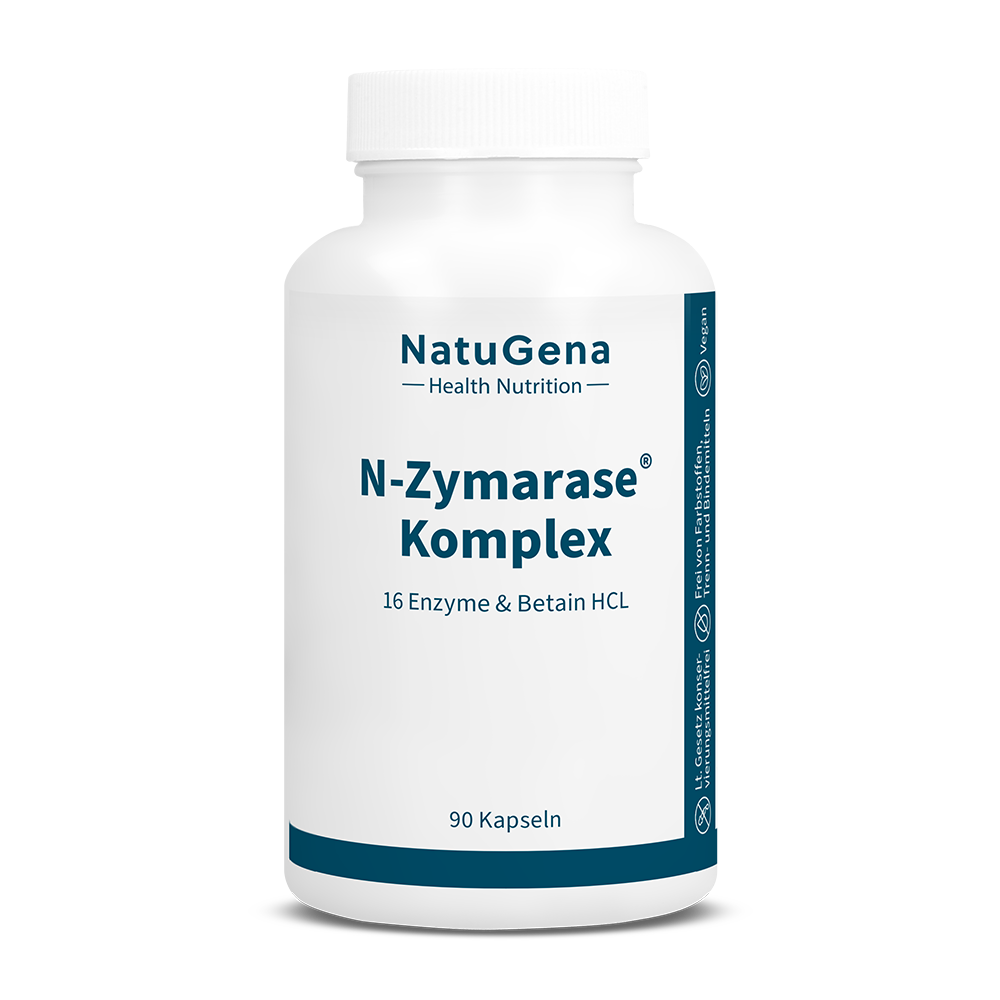
N-Zymarase® Complex by NatuGena – Comprehensive enzyme and betaine complex. This complex combines 16 specifically selected enzymes with betaine HCl and natural bromelain and papain. The enzyme blend covers multiple enzyme classes – including proteases, lipases, cellulases, and carbohydrate-degrading enzymes. Suitable for anyone seeking broad-spectrum enzymatic support – vegan, lactose-free and gluten-free. 90 capsules for a 30-day supply.

  • Betaine HCl: 1,200 mg of betaine HCl per daily dose
  • Lipase I & II: includes both lipase and cellulase mix (types I and II)
  • Bromelain – enzyme from pineapple: derived from the stem and juice of the pineapple plant
  • Papain – enzyme from papaya: extracted from the latex of the papaya fruit, traditionally valued in tropical regions
  • Made in Germany: exceptional purity and bioavailability for optimal nutrient uptake

A balanced diet can be usefully supported by targeted supplementation, especially with meals rich in protein, fat or fibre. N-Zymarase® Complex combines plant-derived and microbially produced enzymes, each active at different pH levels. This enables adaptation to the various stages of digestion and complements the natural enzyme diversity in the diet, particularly beneficial with rich or unbalanced meals.

What makes this complex special?

N-Zymarase® Complex includes a well-designed combination of digestive enzymes – including protease, peptidase, lactase and a dual-formulated lipase and cellulase mix.

The latter combine two variants each to optimally address both plant cell structures and fat-containing food components. The formula is completed with betaine HCl – an acid-forming compound that supports natural gastric acid and is especially valued with high-protein diets.

What is special about bromelain and papain?

Bromelain, derived from the juice and stems of pineapple, brings a touch of tropical diversity to our enzyme blend. This fruit, originally from South America, was highly prized by indigenous peoples for its sweet taste. Papain, from papaya, was already appreciated by the Maya. Both enzymes enrich the complex with their natural properties.

Together with microbially derived enzymes, they form a versatile combination of enzymatic activities similar to those found in fermented foods.

Our Commitment to Quality and Purity

At NatuGena, the purity and quality of our products are of utmost importance.

Our goal is to create highly effective food supplements with uncompromising quality, combining the best of science and nature.

From raw material to final packaging, every step undergoes stringent controls to meet our purity standards.

  • Premium raw materials in pure form, sourced directly from selected producers
  • Free from magnesium stearate, carrageenan, PEG, nanoparticles, GMOs, and synthetic additives
  • Scientifically validated formulas for optimal bioavailability
  • Regular, independent testing for residues, heavy metals, and pesticides
  • Ultra-pure HPMC capsule shells, 100% free from carrageenan and PEG
  • Manufactured in accordance with German quality standards (GMP, HACCP, ISO 9001)

Ingredients

Ingredients per daily dose
Betaine 1 200 mg
Enzyme blend, of which 450 mg
- Protease 210 000 HUT
- Protease 3. 0 75 SAPU
- Cellulase blend 6 000 CU
- Beta glucanase 12 BGU
- Glucoamylase 5 505 DU
- Diastase 7 500 DP
- Lactase 2 850 ALU
- Lipase Blend 7 155 FIP
- Bromelain 300 GDU
- Papain 4 950 TU
- Pectinase 50- endo PGU
- Xylanase 1 800 XU
- Alpha Galactosidose 300 GALU
- Peptidase 75 DPPIV
- Phytase 30 FTU
- Hemicellulase 4 500 HCU
Invertase (100 000 SU/g) 7,5 mg

Composition

Betaine, enzyme blend with Full Spectrum Protease (Protease 70 000 HUT; Protease 3. 0 25 SAPU; cellulase blend 2000 CU; beta glucanase 4 BGU; glucoamylase 1835 DU; diastase 2500 DP; lactase 950 ALU; lipase blend 2385 FIP; bromelain100 GDU; papain 1650 TU; pectinase 50-endo PGU; xylanase 600 XU; alpha galactosidose 100 GALU; peptidase 25 DPPIV; phytase 10 FTU; hemicellulase 1500 HCU), capsule shell: Hydroxypropylmethylcellulose, Invertase 100 000 SU/g.

No further information available.

Which enzyme product is right for which need?

The N-Zymarase products differ primarily in terms of when they should be taken and the specific focus of their formulation. While N-Zymarase Complex and N-Zymarase Intest are designed to support digestion after a meal, N-Zymarase Fructose and N-Zymarase Gluten complement these products for specific needs. N-Zymarase Inflam holds a special place within the product family.

Which is a classic digestive enzyme product to take with a meal?

For a classic digestive enzyme complex, the following three enzymes form a good foundation:

  • Bromelain for breaking down proteins
  • Papain to support protein digestion
  • Lipase for breaking down dietary fats

All three enzymes are included in the following products. Here’s a quick overview of the differences:

  • N-Zymarase Complex - 16 enzymes plus betaine HCl - an exceptionally broad spectrum of enzymes for the digestion of carbohydrates, fats, and proteins
  • N-Zymarase Intest - 8 enzymes - comprehensive digestive support with a focus on fat digestion
  • Bromelain 1200 - 3 enzymes - focuses on highly active bromelain
When are N-Zymarase Gluten and N-Zymarase Fructose recommended?

N-Zymarase Fructose is a specialized product for meals where fructose is the primary focus. It contains the enzyme glucose isomerase, which converts fructose into glucose, supplemented by L-glutamine, vitamins B7 and B9, and zinc, among other ingredients; therefore, it does not replace a broad-spectrum digestive enzyme complex but rather specifically complements it.
Depending on the composition of the meal, N-Zymarase Fructose can be combined with N-Zymarase Complex or N-Zymarase Intest.

N-Zymarase Gluten is designed to enzymatically break down gluten-containing components of a meal, featuring the specific digestive enzyme “Tolerase G” for breaking down gluten, as well as fennel, caraway, and ginger. This product is not a substitute for a gluten-free diet in cases of diagnosed celiac disease.
If needed, N-Zymarase Gluten can be taken with a meal in combination with N-Zymarase Complex or N-Zymarase Intest.

How does N-Zymarase Inflam differ from digestive enzymes?

N-Zymarase Inflam is not designed as a traditional digestive enzyme complex to be taken with meals. In addition to bromelain and papain, it contains the specific enzymes trypsin and rutin. It is recommended to take N-Zymarase Inflam between meals, as this allows the enzymes to be distributed more effectively throughout the body.


NatuGena’s enzyme supplements for the digestion of proteins, carbohydrates, gluten, lactose, and other dietary challenges—for a healthy gut!

  • N-Zymarase Complex: 16 enzymes plus betaine HCl—for a particularly broad spectrum of enzymes to take with meals.
  • N-Zymarase Intest: 8 digestive enzymes—compact support for the digestion of protein, fat, and carbohydrates.
  • Bromelain 1200: Bromelain, papain, and lipase—with a focus on highly active bromelain.
  • N-Zymarase Fructose: a targeted supplement for meals containing fructose.
  • N-Zymarase Gluten: with Tolerase® G for the enzymatic breakdown of gluten. Not suitable for people with celiac disease.
  • N-Zymarase Inflam: bromelain, papain, trypsin, and rutin—not a traditional digestive enzyme; take between meals.

Each enzyme has its own optimal units of measurement. The enzymatic activity of bromelain, for example, is expressed in GDU (Gelatin Digesting Units). This corresponds to the ability to digest gelatin under controlled experimental conditions.

Another example is provided by the so-called HUT units (Hemoglobin Unit Tyrosine base) of the enzyme protease. These units measure the amount of enzyme required to digest a specific amount of tyrosine-releasing peptide bonds from a hemoglobin-containing substrate under standardized conditions.

To provide you with the most meaningful information possible regarding the individual enzymatic activities, the units of measurement for each enzyme may differ from one another.

Unfortunately, it is not possible to convert enzyme units into other units, as they are determined experimentally.

NatuGena’s enzyme supplements for the digestion of proteins, carbohydrates, gluten, lactose, and other challenges—generally for a healthy gut!

No. N-Zymarase Intest contains 8 enzymes, while N-Zymarase Complex contains 16 enzymes. Both contain bromelain, papain, protease, lipase, lactase, glucoamylase, and invertase, as well as a starch-digesting enzyme—amylase or diastase. N-Zymarase Complex also contains betaine HCl.

We work with the independent laboratory AgroLab, which we commission to perform microbiological and heavy metal tests.

In our microbiological testing, we measure the aerobic mesophilic plate count (total plate count), as well as the levels of Escherichia coli (E. coli), yeasts, Salmonella, molds, and staphylococci.

For heavy metals, we test for arsenic, lead, cadmium, and mercury in accordance with the limit values specified in Regulation (EU) 2023/915.

The optimal duration of use depends on the specific nutrient, your initial situation, diet, and individual requirements.

There is therefore no one-size-fits-all recommendation for how long a product should be taken. For products intended to support nutrient intake over a longer period, use over several weeks to months may be appropriate. In many cases, a period of around three months may be suitable before nutrient status and further requirements are reassessed.

In the case of diagnosed deficiencies, medical conditions, or the use of medication, the use of supplements should be individually discussed with a doctor or qualified healthcare professional.

The optimal time to take a supplement depends on the specific nutrient, individual tolerance, and the composition of the product. However, some ingredients can be particularly well suited to certain times of day or meals.

In the morning

Stimulating ingredients are often preferably taken in the morning or during the first half of the day. These include, for example:

  • Coenzyme Q10
  • Green tea extract
  • Certain B vitamins

Especially for sensitive individuals, it may be advisable to avoid taking stimulating ingredients immediately before bedtime.

Throughout the day

For some nutrients, it may be beneficial to divide the daily amount into several doses.

Water-soluble vitamins such as B vitamins and vitamin C can be taken throughout the day.

Magnesium can also be divided into several doses rather than taking the entire daily amount at once. This may improve tolerance, particularly with higher amounts.

In the evening

Depending on the type of magnesium compound, taking it in the evening may be beneficial. Magnesium glycinate, for example, is often preferably taken in the evening.

In general, however, the best time to take a product also depends on when it is individually best tolerated and can be reliably incorporated into your daily routine.

With a meal

Some nutrients benefit from being taken together with a meal.

Fat-soluble vitamins A, D, E, and K can be taken together and ideally with a meal containing some fat.

Omega-3 fatty acids should also be taken regularly with a meal. Omega-3 oils can be combined well with fat-soluble vitamins.

Many plant-based ingredients can also be taken as part of a meal or together with omega-3 products. However, the optimal timing depends on the specific plant compound and product formulation.

Zinc can cause nausea or stomach discomfort on an empty stomach in some people. If you have a sensitive stomach, it is therefore advisable to take zinc with a meal.

Between meals

Iron is often taken separately from meals, as various foods and beverages can affect its absorption. It is particularly advisable to leave a gap between iron and:

  • Coffee and tea
  • Caffeinated beverages
  • Milk and dairy products
  • Calcium- or mineral-rich supplements

However, if you have a sensitive stomach, iron can also be taken with a meal. In this case, individual tolerance is more important than a theoretically optimal intake situation.

Enzyme supplements vary depending on their intended use: digestive enzymes are generally taken with meals. Products that are specifically intended to be taken between meals may, for example, be taken around 30 minutes before a meal. The product's specific recommended intake should always be followed.

Around exercise

Proteins and amino acids can be taken both before and after training.

If you exercise on an empty stomach, taking them around 30 minutes before training may be beneficial. If you have already eaten a protein-rich meal, you can also plan your protein intake for after training.

In general, ensuring sufficient protein intake throughout the entire day is more important than adhering to a narrow time window around your workout.
Responsible person for the EU

The economic operator based in the EU responsible for this product:


, ,


(Please note: By clicking on this link, you may leave natugena.de and be redirected to an external website. Please note that we are not responsible for the content of these websites.)

This could be interesting to you