
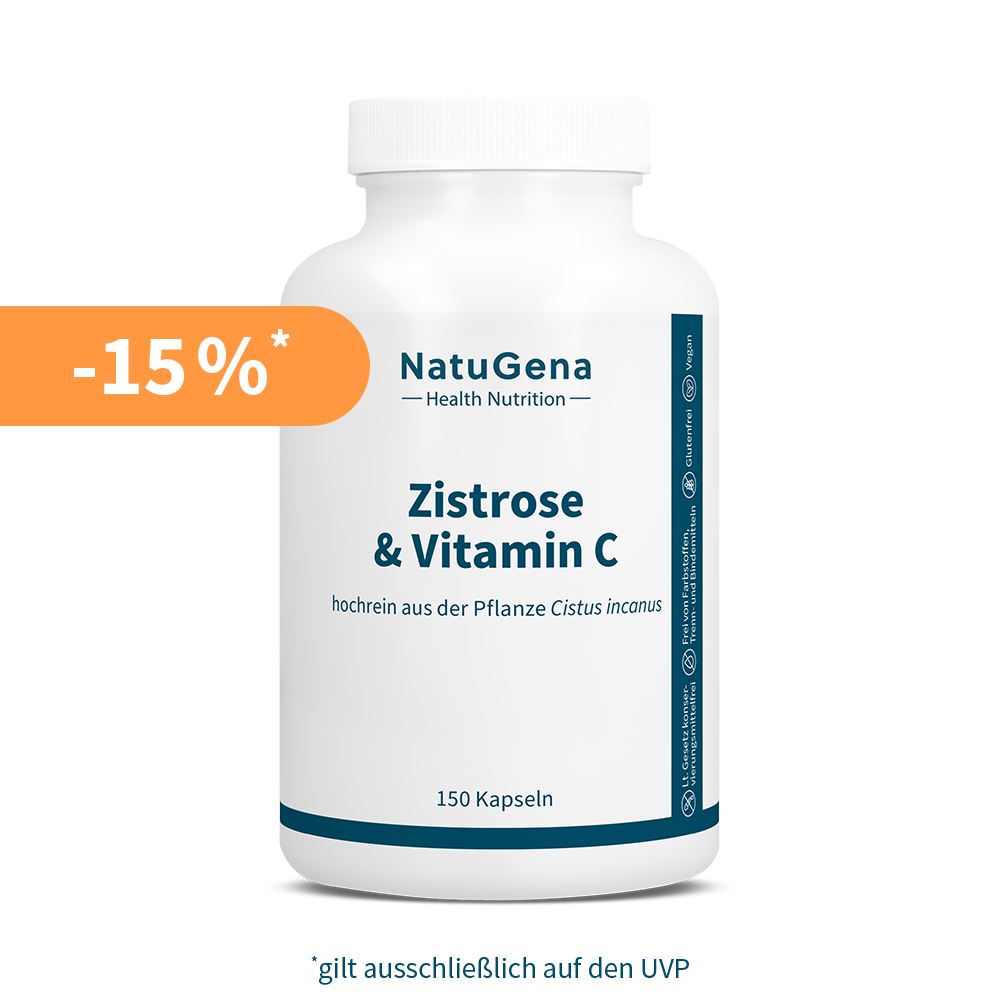
24,95 € 21,21 €
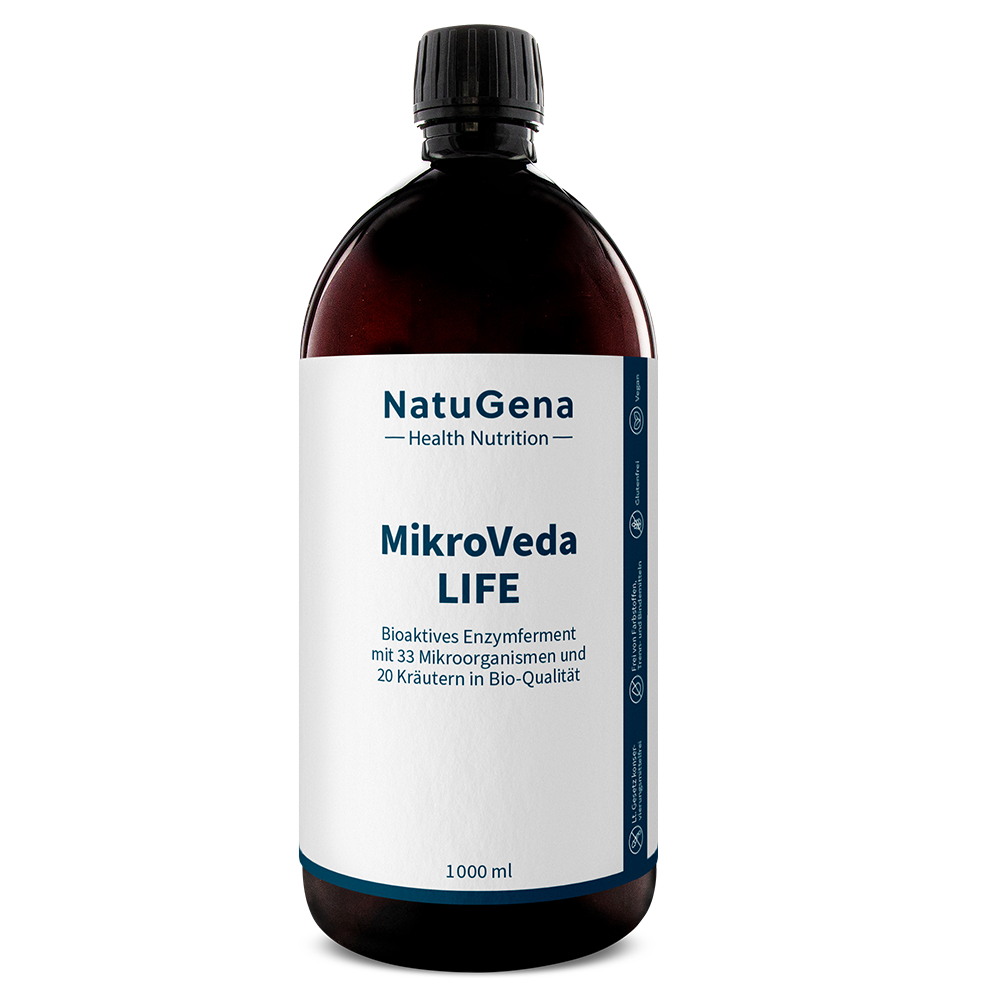
This item is no longer available. The replacement item is .
- Free of dyes
- Gluten-free
- Preservative-free as required by law
- Lactose-free
- Vegan
- Free of anti-caking and binding agents
Product Type
nutritional supplement
Content
ml fluid
| Price Tiers |
| from 1 Pieces | 39,95 € |
| from 3 Pieces | 35,95 € |
| from 5 Pieces | 33,95 € |
Quality
- No separating agents, binding agents or colourants
- Free from genetic engineering, nanoparticles and animal testing
- Hypoallergenic and sensitive formulations (e.g. free from lactose, soya and gluten where possible)
- Ultra-pure, plant-based coating agents (HPMC) and food-safe, light-protected containers
- Free from unwanted additives such as PEG, silicon dioxide, magnesium stearate & titanium dioxide
- Premium raw materials from pure substances
- Regular, independent testing for harmful substances
- Production in accordance with German quality standards (GMP, HACCP, ISO 9001)
Recommended Consumption
Content
Blog Articles
There are no blog texts available for this product.
FAQ
Both products are high-quality organic ferments containing more than 30 different strains of microorganisms and a liquid formulation. They are characterized by their pleasantly distinctive taste, contain Bacillus subtilis – the “Microbe of the Year 2023” – and are produced according to the highest organic quality standards.
- BactoGena Liquid Plus additionally contains 20 organically grown herbs – just like the former MikroVeda LIFE – and is therefore its direct successor. The selected herbs give the ferment its distinctive spicy, herbal and pleasantly bitter taste.
- BactoGena Liquid Pur instead contains medicinal mushrooms such as Cordyceps, Reishi and Hericium. As a result, the taste is milder, slightly yeasty and subtly reminiscent of apple cider vinegar. It is an alternative product variant.
Yes. BactoGena Liquid Plus is the successor to MikroVeda LIFE.
The formulation is almost identical. As part of a product update, only the name was changed. If you have previously used MikroVeda LIFE, you can switch to BactoGena Liquid Plus without concern. The bioactive enzyme ferment contains 33 microorganisms and 20 herbs of organic quality.
Histamine can cause certain products to be less well tolerated in sensitive individuals. Those affected are often unaware that their body is releasing increased amounts of histamine.
Histamine release is particularly increased during allergic reactions, with possible consequences including itching, redness, swelling or digestive problems.
Which products are particularly recommended for histamine sensitivity?
- Omega-3 fatty acids – EPA (eicosapentaenoic acid) and DHA (docosahexaenoic acid)
- HistaStabil – with quercetin and other secondary plant compounds
- HistaBakt – contains selected histamine-reducing and histamine-neutral bacterial strains
- Zeolite – as an approved medical device, it can help bind substances in the intestines that may be burdensome
- MyrrheAktiv – with plant-based ingredients such as frankincense, chamomile and black cumin
- Phospholipid-4 Complex – provides building blocks for mucous membranes and cell membranes
Find out more in the detailed blog article by Thorsten Schmitt: Allergies with a focus on histamine causes, symptoms & approaches to solutions.
Book recommendation: The Histamine Misconception – for anyone who wants to specifically adapt their diet, written by K. & S. Kauffmann.
What should you be more mindful of if you are sensitive to histamine?
Use with caution and adjust the dosage individually:
- B vitamins – some are fermented and may not always be well tolerated in cases of histamine sensitivity
- Herbal ferments (e.g. BactoGena Liquid Plus and Pur) – contain biogenic amines as a result of fermentation
- L-glutamine – in cases of histamine sensitivity, it is advisable to start with a low dosage and adjust the amount individually. L-glutamine is an amino acid obtained from corn starch through fermentation.
- The same applies to MukosaAktiv and MukosaPowder – gradually increasing the dosage may be advisable, as they contain L-glutamine as well as other selected ingredients such as aloe vera, frankincense and zinc. Zinc contributes to the maintenance of normal mucous membranes.
We work with the independent laboratory AgroLab, which we commission to perform microbiological and heavy metal tests.
In our microbiological testing, we measure the aerobic mesophilic plate count (total plate count), as well as the levels of Escherichia coli (E. coli), yeasts, Salmonella, molds, and staphylococci.
For heavy metals, we test for arsenic, lead, cadmium, and mercury in accordance with the limit values specified in Regulation (EU) 2023/915.
The optimal duration of use depends on the specific nutrient, your initial situation, diet, and individual requirements.
There is therefore no one-size-fits-all recommendation for how long a product should be taken. For products intended to support nutrient intake over a longer period, use over several weeks to months may be appropriate. In many cases, a period of around three months may be suitable before nutrient status and further requirements are reassessed.
In the case of diagnosed deficiencies, medical conditions, or the use of medication, the use of supplements should be individually discussed with a doctor or qualified healthcare professional.
The optimal time to take a supplement depends on the specific nutrient, individual tolerance, and the composition of the product. However, some ingredients can be particularly well suited to certain times of day or meals.
In the morning
Stimulating ingredients are often preferably taken in the morning or during the first half of the day. These include, for example:
- Coenzyme Q10
- Green tea extract
- Certain B vitamins
Especially for sensitive individuals, it may be advisable to avoid taking stimulating ingredients immediately before bedtime.
Throughout the day
For some nutrients, it may be beneficial to divide the daily amount into several doses.
Water-soluble vitamins such as B vitamins and vitamin C can be taken throughout the day.
Magnesium can also be divided into several doses rather than taking the entire daily amount at once. This may improve tolerance, particularly with higher amounts.
In the evening
Depending on the type of magnesium compound, taking it in the evening may be beneficial. Magnesium glycinate, for example, is often preferably taken in the evening.
In general, however, the best time to take a product also depends on when it is individually best tolerated and can be reliably incorporated into your daily routine.
With a meal
Some nutrients benefit from being taken together with a meal.
Fat-soluble vitamins A, D, E, and K can be taken together and ideally with a meal containing some fat.
Omega-3 fatty acids should also be taken regularly with a meal. Omega-3 oils can be combined well with fat-soluble vitamins.
Many plant-based ingredients can also be taken as part of a meal or together with omega-3 products. However, the optimal timing depends on the specific plant compound and product formulation.
Zinc can cause nausea or stomach discomfort on an empty stomach in some people. If you have a sensitive stomach, it is therefore advisable to take zinc with a meal.
Between meals
Iron is often taken separately from meals, as various foods and beverages can affect its absorption. It is particularly advisable to leave a gap between iron and:
- Coffee and tea
- Caffeinated beverages
- Milk and dairy products
- Calcium- or mineral-rich supplements
However, if you have a sensitive stomach, iron can also be taken with a meal. In this case, individual tolerance is more important than a theoretically optimal intake situation.
Enzyme supplements vary depending on their intended use: digestive enzymes are generally taken with meals. Products that are specifically intended to be taken between meals may, for example, be taken around 30 minutes before a meal. The product's specific recommended intake should always be followed.
Around exercise
Proteins and amino acids can be taken both before and after training.
If you exercise on an empty stomach, taking them around 30 minutes before training may be beneficial. If you have already eaten a protein-rich meal, you can also plan your protein intake for after training.
In general, ensuring sufficient protein intake throughout the entire day is more important than adhering to a narrow time window around your workout.
Country-specific information
This item may not be resold in the following countries: Switzerland
Responsible person for the EU
The economic operator based in the EU responsible for this product:
NatuGena GmbH, Münchener Str. 149, 85051 Ingolstadt, Germany,
+49 841 90 255 000, info@natugena.de, https://www.natugena.de